XP ICONICXP Contact ↗

Development journal · Updated as we build

INSIDE
THE BUILD.

A clear record of how Hearth & Fortune grew from Iconic XP’s original idea—from the studio concept and first design principles to daily experiments, setbacks, and verified progress.

LOG WINDOWCONCEPT—SEP 25
ENGINE TRACKSUNITY + UNREAL
REPORTING MODEEVIDENCE-LABELED

From original concept to September 2026

Concept · before the first dated checkpoint

THE IDEA
BEFORE THE BUILD.

These recovered chapters establish the game and studio ideas first. Their exact dates and order within the early concept period were not preserved.

GAME 01MERCHANT CONCEPT
DATE NOT PRESERVED
CORE VISIONMERCHANT / ORDINARY LIFE

The game began with a question: what if the world did not revolve around the player?

The player would arrive as an ordinary person with little or nothing and choose a life rather than follow a hero script. Laborer, merchant, farmer, craftsperson, thief, employer, landowner, or ruler could emerge from the same simulation. NPCs would have persistent identities, households, money, needs, relationships, memories, and ambitions of their own.

RULE 01FOUNDING PRINCIPLES
DATE NOT PRESERVED
DESIGN RULESIMULATION OWNS THE TRUTH

“Simulate the routine. Play the stories.” became the foundation.

Work, goods, property, agreements, families, crime, settlement growth, and politics would come from connected systems. Nearby life could run in detail while distant places advanced in a lighter simulation. AI could help people speak naturally, but it could never invent money, ownership, relationships, or other facts the game had not created.

These were design commitments before they were implemented features. The dated journal that follows records the work of turning them into proof.

ORIGINBEFORE DEVELOPMENT
DATE NOT PRESERVED
STUDIO IDEAJIM + RYKER / TWO PATHS

Iconic XP began as a father-and-son experiment in making games.

Ryker would learn game design and coding hands-on, creating without AI. Jim would test how far a regular person could take an ambitious idea with AI. Different methods, one company, and a shared aim: create experiences people remember.

“Games are played. Experiences are remembered.”
SITE 01EARLY STUDIO CONCEPT
DATE NOT PRESERVED
CONCEPTTHE JOURNEY TO ICONIC XP

The first website made the studio itself feel like a discovered world.

The original Google Sites concept used a dark fantasy path and castle, a purple frog guide, a two-legged deer, Froggy Doggy, the Iconic Cannon, and a hidden “Experience” page with a respawn link. It introduced Iconic XP, teased a first project in development, and invited visitors into the journey.

That site captured the playful beginning, but its fantasy characters and AI-looking artwork no longer matched the mature technology-and-game studio Iconic XP wanted to become. It is preserved here as the first chapter, not the current design direction.

The long horizon · planned, not yet built

FROM ONE PERSON
TO A LIVING WORLD.

Hearth & Fortune is intended to connect the intimacy of a life simulation with the consequence of a regional strategy game. Power should grow out of people, places and time—not a menu unlock.

ACT I / LIFE

Live long enough to leave something behind.

Begin without a title. Build skills, relationships, a livelihood and a household. Age changes what is possible. Death does not erase the world: a new generation inherits the benefits, duties, rivals and mistakes of the last.

ACT II / SOCIETY

Other families are building futures too.

NPC households grow into settlements and distinct societies shaped by climate, resources, belief, trade and conflict. They form alliances, split, migrate, dominate routes and compete for regional control whether the player intervenes or not.

ACT III / REALM

A crown must be earned—and defended.

Across generations, the player may gain land, followers, legitimacy and military authority, become king, expand territory or challenge an NPC realm. Strategic warfare depends on food, wages, roads, equipment, morale, diplomacy and the damage war leaves behind.

THE GOVERNING RULE

NPC rulers play by comparable rules. Their societies need people, resources, transport and legitimacy; conquest transfers contested control and creates consequences instead of free wealth.

07—23 September 2026

OLDEST PROOF
TO LATEST.

Once the dated record begins, every checkpoint moves forward in time. Early Unity systems lead into the Unreal migration, environment proof and release groundwork.

BASELINEPROJECT / VISION

The first formal brief separated the dream from the working prototype.

The brief defined an open-ended medieval life and economy simulation while recording the Unity systems that already existed: work and carry animation loops, logging reservations, hauling, a sawmill conversion chain, and inspection support. Visible production stockpiles and the full living-world promise remained unfinished.

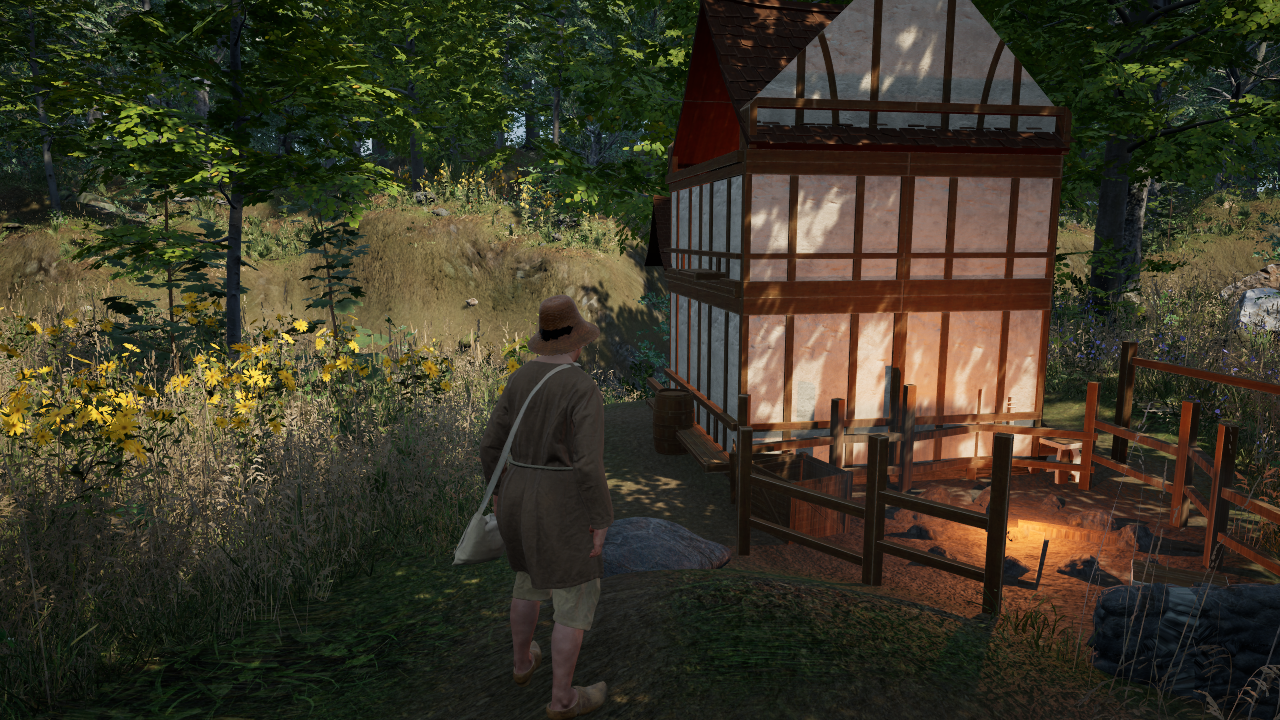
Early Hearth and Fortune prototype showing the first character and simple terrain
Early Unity proof · A character in the first world
PLAYABLE SYSTEMSUNITY / FIRST FULL HANDOFF

The first documented prototype connected people, work, and place.

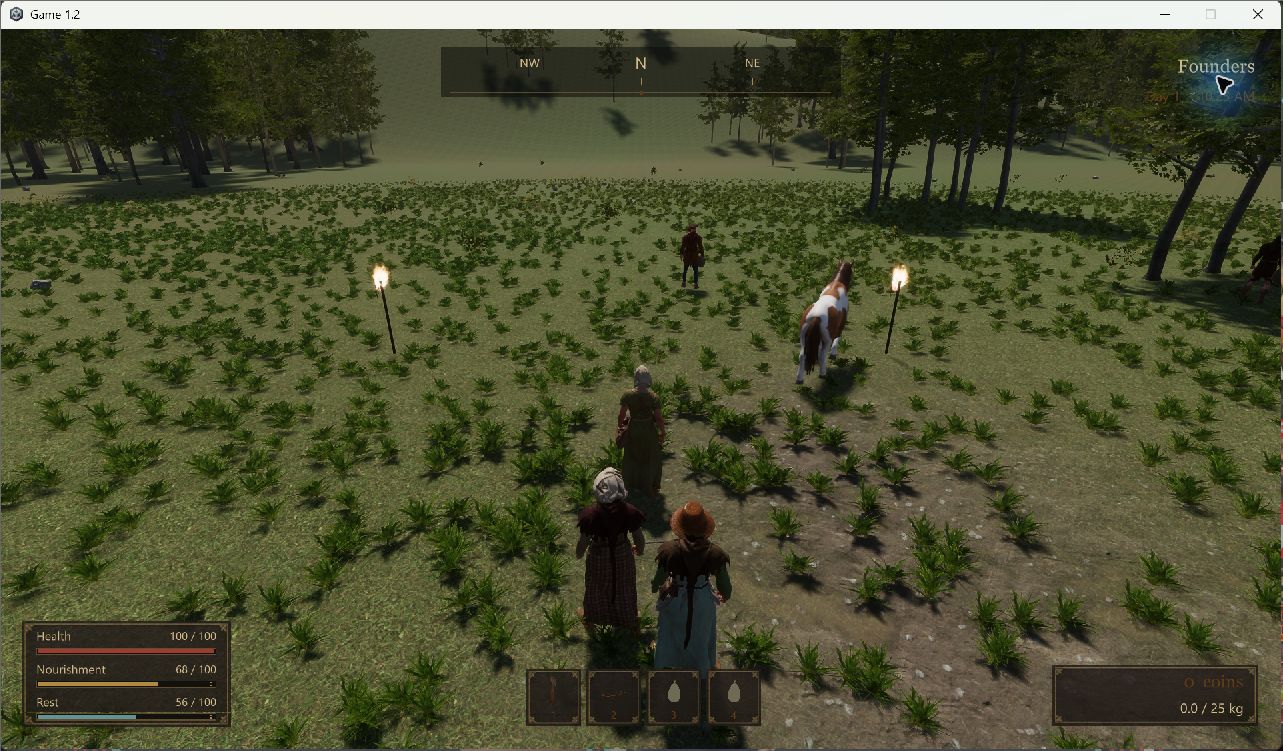
Founders and Farfield existed as separate settlements. Residents could gather finite materials, make and share tools, fell and carry timber, invest in work, use handcarts, approach wild horses, wear paths through grass, and hold basic offline conversations.

  • The broader economy was present in pieces; the complete autonomous chain had not yet been demonstrated.
  • The expanded save format existed, but a fully accepted restart and reload test was still open.
  • No distributable alpha was produced in this pass.
Unity foundation with villagers, a horse and the survival interface
Unity foundation · People, movement and systems
ALPHA PLANUNITY / TESTING

The Unity build and closed-alpha path were identified.

The Windows executable was located for local play, and the testing discussion defined Merchant as a closed alpha. A versioned private web build was explored as a faster update-and-test route, without presenting it as shipped.

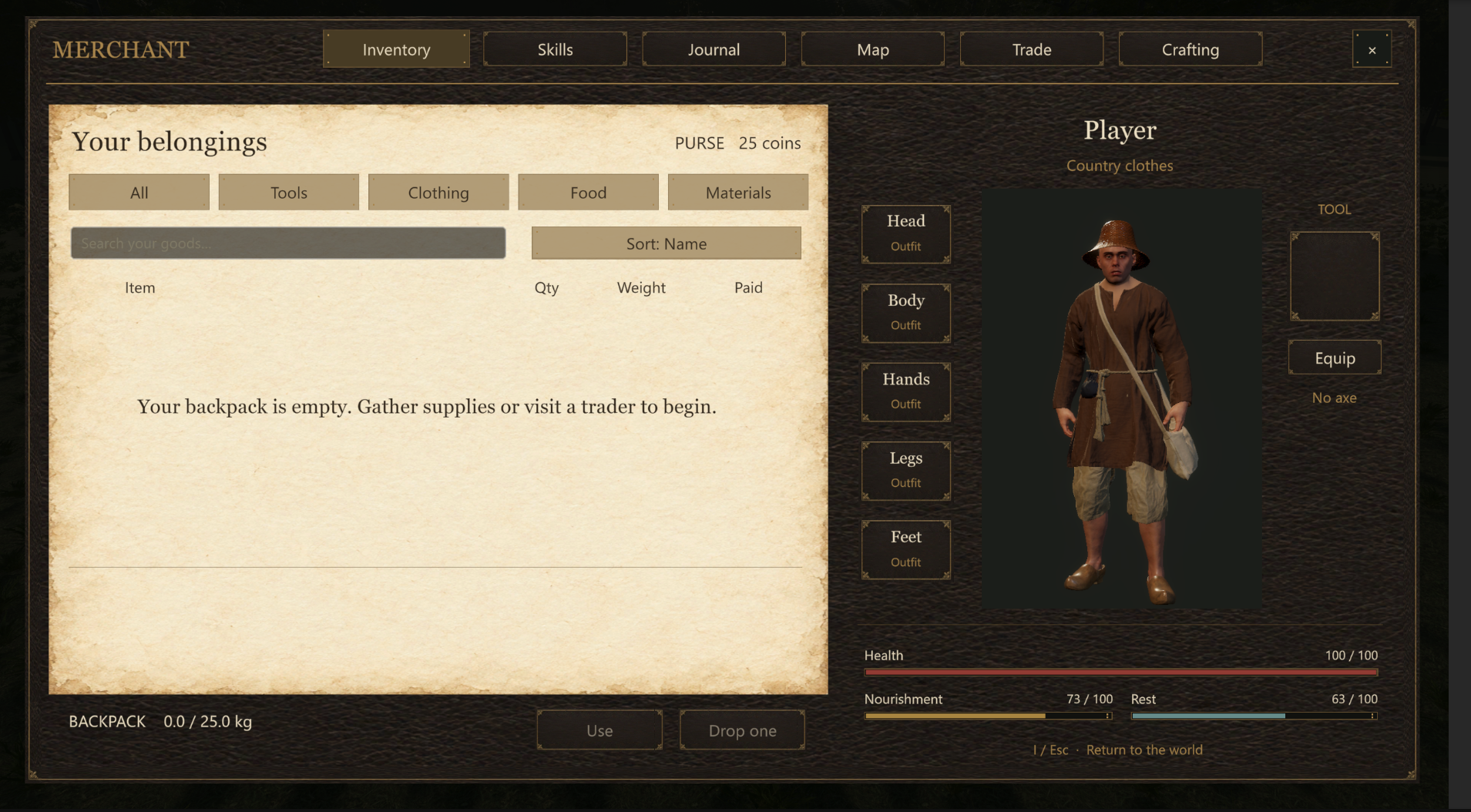
Unity inventory and equipment interface from the early alpha
Early alpha · Identity, equipment and inventory
MIGRATIONUNITY → UNREAL 5

Unreal Engine 5 was designated as the active game project.

The release plan required a clean Windows package, launch testing outside the Editor, separate Unity and Unreal download labels, and a review before public publication.

VERIFIEDUNREAL / WINDOWS

The Unreal project became the active release track.

The existing Development build was identified and preserved while a separate Shipping build path was prepared. The Unity version remained available as the comparison and fallback track.

ISOLATEDRIVERSIDE CAMP

A bounded environment proof began.

The test called for a roughly 30×30 metre riverside camp, a normal player camera, day/sunset/night captures, and performance evidence—without touching Founders, saves, economy, NPCs, or live gameplay systems.

FAILED → LEARNEDRIVERSIDE / MATERIALS

The first Unreal environment pass exposed its own failure.

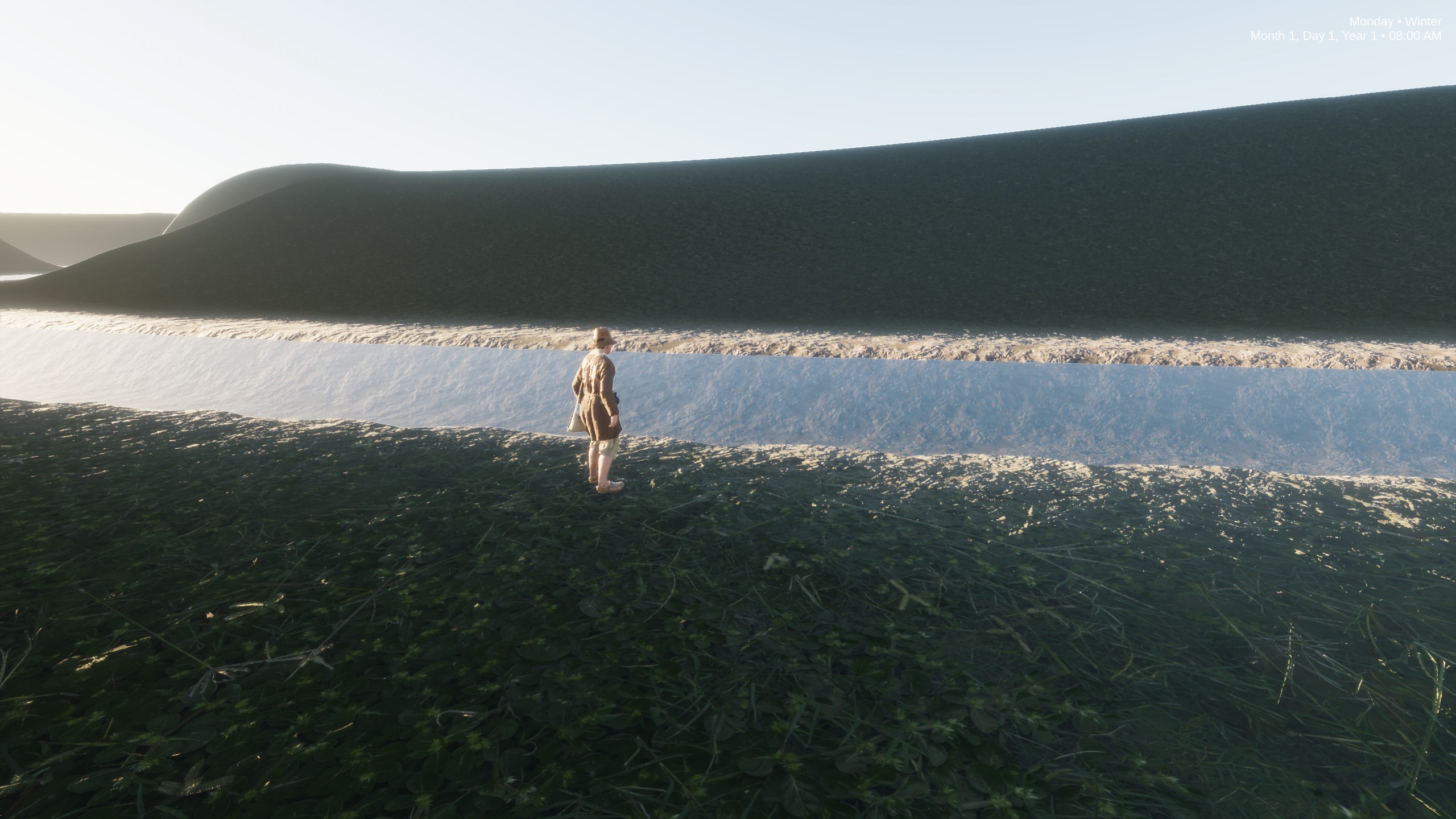
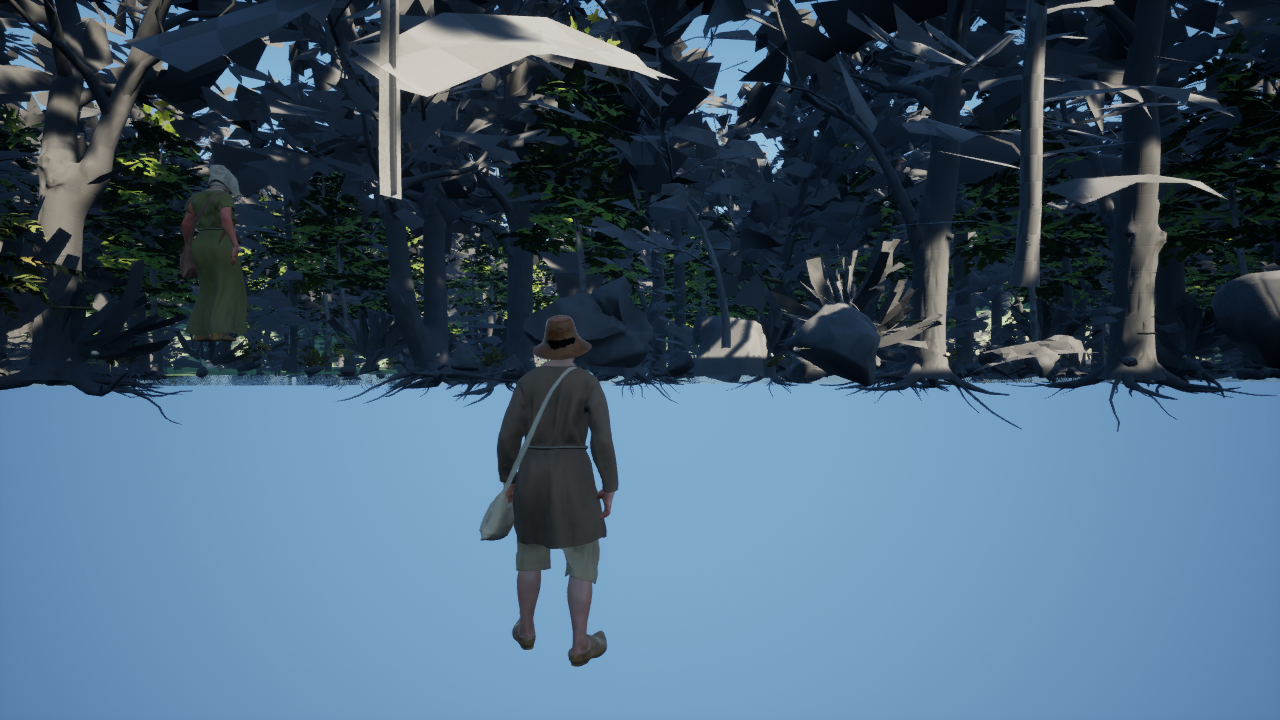
Grey shard-like surfaces broke the natural scene. The failed capture was preserved as evidence, then used to drive the cleaner woodland, river, and village route that followed.

Earlier Unreal Riverside test showing the grey-shard visual failure.
Before / grey-shard material failure
DECISIONWORKFLOW / OWNERSHIP

Agent ownership became explicit.

Cursor, Codex, and other work lanes were assigned bounded scopes so two tools would not modify the same Unreal files. Existing building-upgrade work was protected while visual proof continued in isolation.

PROPOSALWORLD SCALE

The 10× world target was separated from what the build could prove.

Traffic, nature-layer, and outdoor-cap work advanced, but no claim of a larger playable world was accepted without traversal, streaming, navigation, save, and performance evidence.

VISUAL PROOFRIVERSIDE / PLAYER CAMERA

Four Riverside routes cleared visual review.

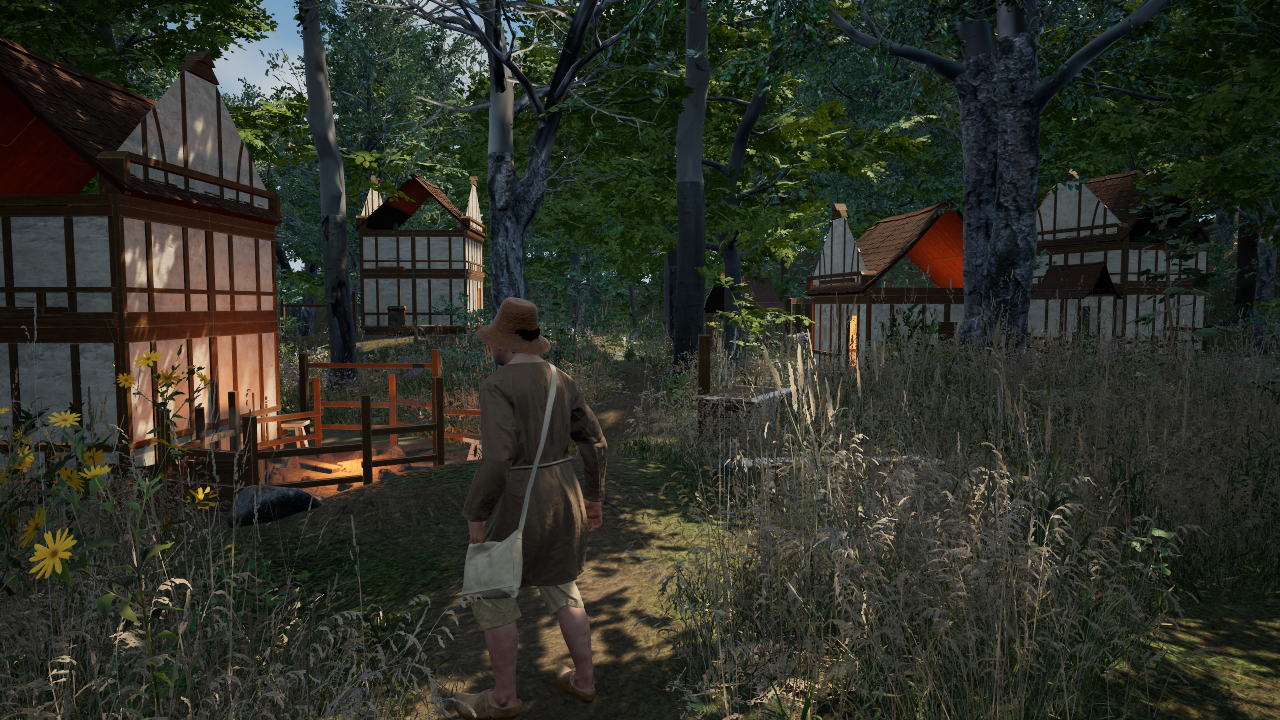
After earlier grey-shard failures, the environment pass produced four accepted player-height views: Lane North, Green to River, River to Village, and Village to Pass. They became the clearest visual evidence of the current Unreal world.

Accepted Riverside Lane North player-height capture.
Accepted proof / Riverside Lane North
AUDITEDITCH.IO / RELEASE

The publishing identity and release channels were verified.

The Merchant itch.io target and Butler lanes were checked without uploading. The release gate stayed tied to actual runtime behavior, legacy-save safety, and a packaged build rather than source checks alone.

THREE PASSESWATERFALL / LEARNING THROUGH FAILURE

The waterfall was not one build. Each version answered a different question.

The experiment remained isolated from the playable game. The images show why the first idea was kept as evidence, why modifying it was not enough, and why the team later returned with a different landform-first design.

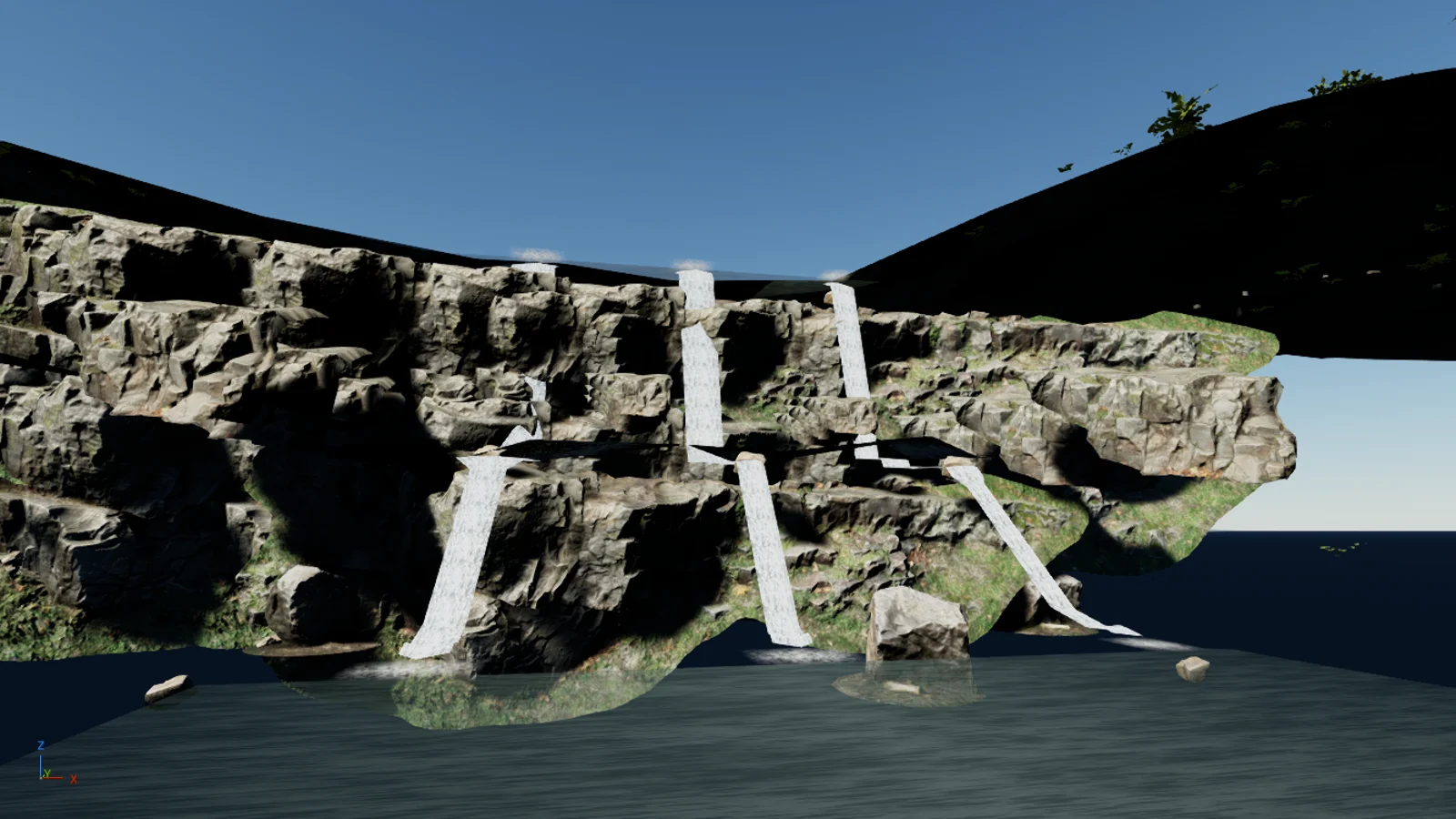
The first experimental waterfall build with several narrow white cascades across exposed rock shelves
01 · FIRST BUILDProve that water could cross a large rocky composition.

The first pass established scale and multiple drops, but the cliff, lake and water read as separate pieces. It became the baseline rather than something to hide.

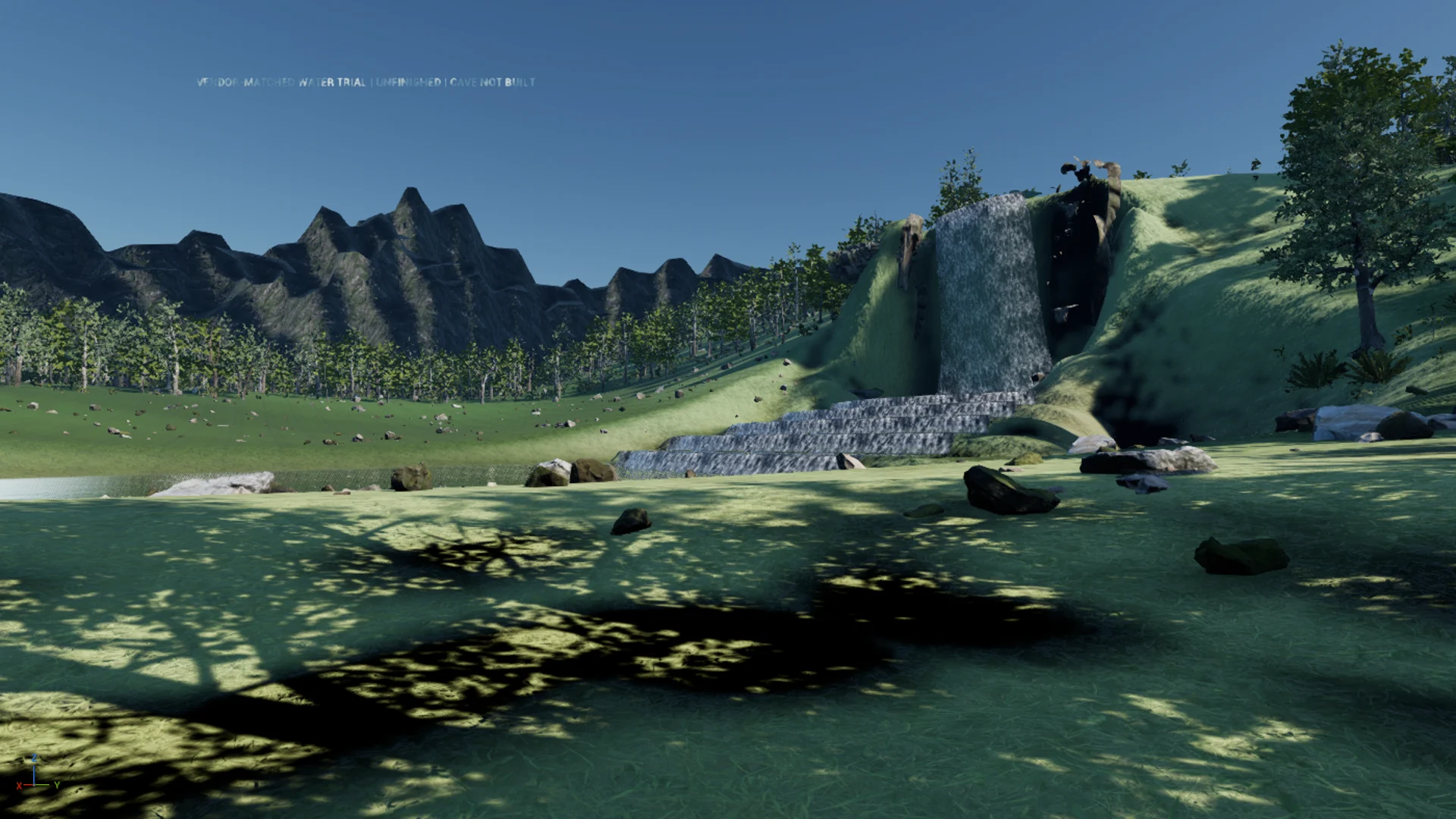
The modified waterfall trial with a broad upper drop, stepped cascades and a landscaped valley
02 · MODIFY THE IDEARepair the flow without discarding the experiment.

The scene gained terrain, trees and a stronger valley composition. Matching the water material to the intended flow direction improved readability, while the repeated steps and weak cliff joins showed the limits of the approach.

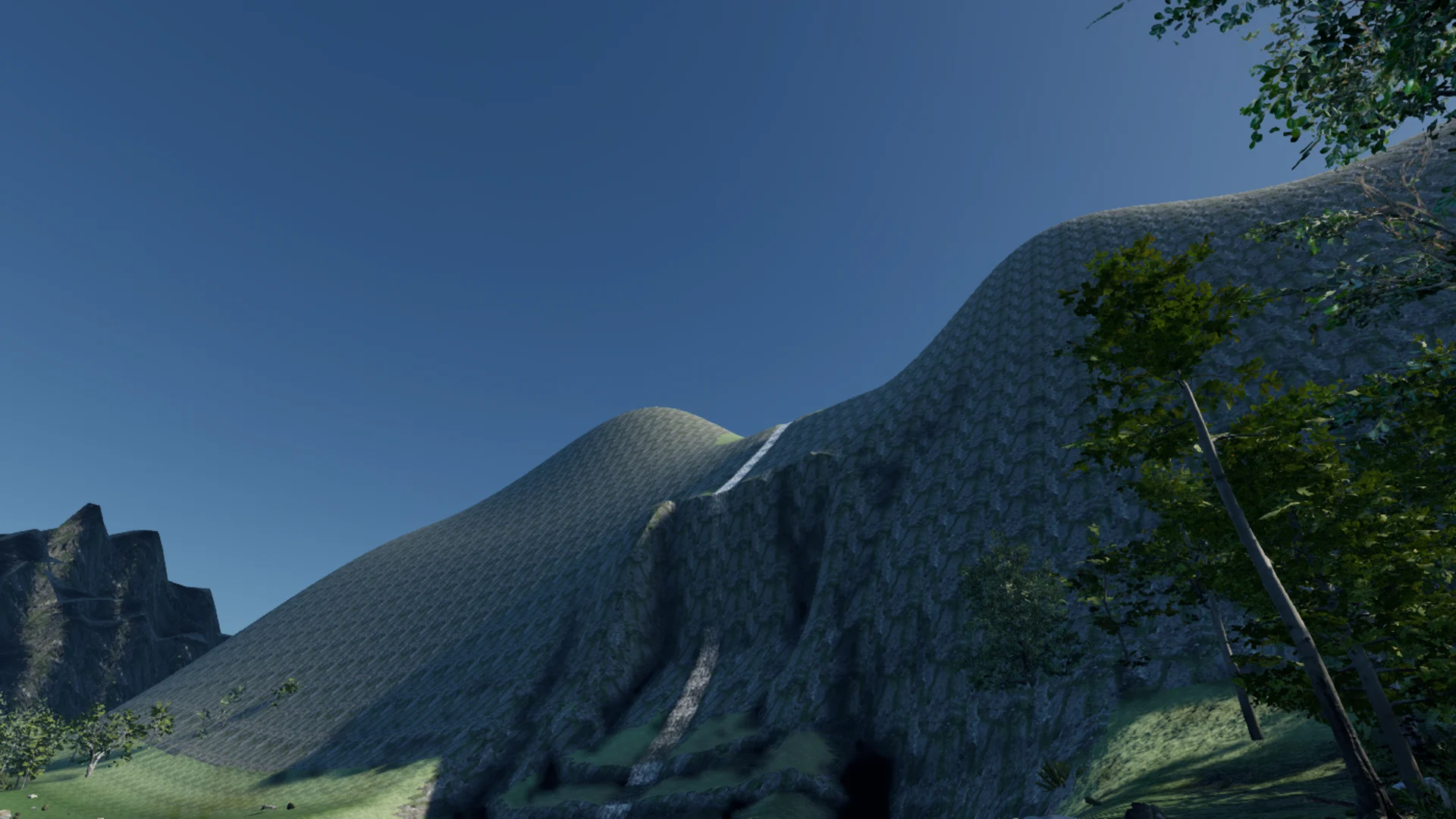
A later mountain runoff waterfall design following a sloped natural channel between high rock faces
03 · APPROACH IT AGAINStart with the mountain and let the water follow the land.

The later design treated the waterfall as hillside runoff with shaped banks instead of a stack of water strips. It was a new direction under study, still isolated and not presented as finished playable-world scenery.

What the sequence taught us: visual progress can mean learning that a composition should be redesigned, not polishing the first attempt forever.

23—25 September · 39/39 notes represented

THE RECORD
DEEPENS.

The broad journal now hands off to every saved core-foundation checkpoint in date order. Each note is reduced to the player-facing change, strongest recorded evidence and next honest gate. Open a card for the evidence boundary.

06 SOURCE NOTES

Foundation decisions and verified slices

Identity, property, compatibility and character work moved into bounded lanes. The wardrobe pipeline became safer, but character promotion still required normal-camera, locomotion, LOD, clipping and packaged proof.

DESIGN RULEPROPERTY / ECONOMY

A sale must involve a real owner, buyer, price and consequence.

The design rule allows any asset, including inherited property, to be sold when a willing buyer can actually pay. Ownership, occupancy and rent remain separate so a home can change hands without inventing money or replacement housing.

Evidence and remaining gate +

EvidenceA bounded NPC-residence-to-player sale path now transfers real coins and title, records the payment and explains the resident move-out result when the player is involved.

Still openRent, businesses and other asset classes still need their own transaction and liability rules, plus normal player-interface review.

SOURCE NOTE · Asset-sale-rule.md
DESIGN REVIEWFOUNDATION / FIRST HOUR

The first hour was broken into safe, testable foundation slices.

The review ordered legacy-save protection, residence occupancy, inventory sale allocation, coordinator removal, one observable first-hour consequence and later regional growth. It also corrected an overclaim: delivering food to Agnes does not yet guarantee a visible study session.

Evidence and remaining gate +

EvidenceSource paths, compatibility risks, an acceptance matrix and comparable-game references were documented without changing the live project.

Still openEvery slice still needs its own authorized implementation and runtime evidence; the report itself proves design readiness, not gameplay.

SOURCE NOTE · Foundation-first-hour-integration-review.md
VERIFIEDSAVE COMPATIBILITY

Authentic older saves replaced fragile header-rewrite tests.

Version 45, 46 and 47 fixtures now have frozen expected migrations, exact current-format reload checks and transactional rejection of damaged data. A synthetic version-46 order case is clearly labelled as synthetic.

Evidence and remaining gate +

EvidenceNative suites, the MerchantEditor build and isolated engine load, prepare, save and reload checks all passed while 147 protected hashes stayed unchanged.

Still openNo packaged or normal-player acceptance run was produced, and sustained economy behavior remains outside this checkpoint.

SOURCE NOTE · Legacy-compatibility-completion.md
PREFLIGHTHOUSING

Residence occupancy was specified before its save migration was approved.

The preflight defined a saved occupant household separate from the property owner, deterministic migration for older saves and transactional rejection of invalid assignments. It deliberately excluded rent, sales, UI and map work.

Evidence and remaining gate +

EvidenceOriginal bytes, source hashes, legacy behavior and a synthetic equal-quality residence case were preserved; 603 protected files remained unchanged.

Still openThis note records the earlier approval block. The later occupancy completion entry shows the authorized implementation and validation that followed.

SOURCE NOTE · Occupancy-preflight-and-approval.md
IMPLEMENTEDHOUSING / INHERITANCE

Homes now remember who owns them and who lives in them.

Residence occupancy is saved separately from ownership, vacancies remain explicit and construction or relocation updates the assignment. Household title passes to the next oldest living member without moving cash, property or obligations into invented accounts.

Evidence and remaining gate +

EvidenceNative, Editor and isolated engine checks passed, including authentic version 45–47 migration, death succession, vacancy and exact reload; 602 protected files remained unchanged.

Still openThe slice does not provide a general property market, rent system, packaged build or player visual acceptance.

SOURCE NOTE · Occupancy-inheritance-completion.md
IMPLEMENTEDPROPERTY SALE

The first completed-home sale became a real transaction.

The Journal can show a nearby completed residence when the player is buyer or seller. A confirmed deal rechecks the quote, transfers real coins and title together, records payment and moves an owner household out without granting replacement housing.

Evidence and remaining gate +

EvidenceNative suites, the MerchantEditor build, isolated engine property and occupancy checks, and authentic version 45–47 save migrations passed.

Still openOnly move-out sales of completed homes are covered. Rent, other assets, investment buyers, packaged runtime and normal player clicks remain open.

SOURCE NOTE · Property-sale-completion.md

08 SOURCE NOTES

Playable candidates and honest release gates

The first-hour foundation was audited before more surface features were added. Opening, save, property and NPC-action work advanced, while the Founders start remained blocked on clear player-height evidence.

PREFLIGHTCOORDINATOR REMOVAL

Removing the Coordinator was recognized as an economy migration.

The role controls saved citizens, market stock, public money, wages, construction funding and old obligations. The safest path preserves people and goods, assigns real owners and payers, settles recorded liabilities and then removes the office and its instructions.

Evidence and remaining gate +

EvidenceA six-step migration and validation order was documented; the accepted-action HUD was already working in the local Editor build.

Still openNo coordinator economy or save migration changed in this note. The old role, public account and older Book and Journey language remain.

SOURCE NOTE · Coordinator-removal-preflight-20260924.md
ENGINE CHECKEDAGING / PERSISTENCE

Citizens gained saved birthdays and deterministic aging.

A versioned birth-day record advances adult ages on the 360-day calendar, preserves migrated saves and uses recorded age for inheritance order. It avoids inventing parents, spouses or historical birthdays for old campaigns.

Evidence and remaining gate +

EvidenceStandalone checks, an Editor build and a focused packaged age test passed alongside legacy, property, occupancy, opening, save-slot and NPC scenarios.

Still openThis is adult age persistence, not marriage, birth, childhood simulation or player acceptance. Later Book, Knowledge and Career test fixes were not in the cited package.

SOURCE NOTE · Lifecycle-age-foundation-20260924.md
EDITOR CHECKEDNPC AGREEMENTS / HUD

The task panel began showing accepted NPC work instead of automatic instructions.

A fresh campaign displays no task box. After the player accepts a citizen delivery, the panel can show the citizen, goods, destination, progress and deadline, while declined, expired or completed offers stay out of the way.

Evidence and remaining gate +

EvidenceMerchantEditor compiled, isolated opening and trade checks passed, and player-height screenshots recorded both the empty and accepted-delivery states.

Still openThe Coordinator and older commission language remain, and this candidate had not entered the archived package or received a human input playthrough.

SOURCE NOTE · NPC-action-HUD-checkpoint.md
LOCAL PACKAGEOPENING / SAVES / PROPERTY

Three openings, five save slots and the first property systems reached a local package.

The package supports friends, recruits or solo starts; open ground or an existing town; a basic starter outfit; five separate checkpoints; and the completed-home sale and occupancy slices.

Evidence and remaining gate +

EvidenceEditor, native, isolated engine and packaged checks passed for 24 arrival combinations, all three journeys, save isolation, legacy migration, property sale, occupancy and homestead navigation.

Still openOrdinary mouse and keyboard review, approved MetaHuman customization, rent and universal asset sales were still incomplete. This was not a final alpha.

SOURCE NOTE · Opening-save-and-property-checkpoint.md
LOCAL CANDIDATEFOUNDERS OPENING

All three starts moved near people at Founders.

Friends, recruits and solo arrivals begin near established Founders ground, where Agnes asks whether the player will begin there or look elsewhere. The player remains free to move, and the question grants no land, contact or forced choice.

Evidence and remaining gate +

EvidencePackaged opening, conversation, travel-trade, save-slot, property, occupancy and homestead checks passed, with normal-player captures for all three starts.

Still openThe Coordinator actor and old Journal directions remain, and human mouse and keyboard review plus long-form performance play are still open.

SOURCE NOTE · Play-Founders-candidate-20260924.md
LOCAL CANDIDATETRAVELING TRADERS

Traveling merchants can no longer trade through a distant home stall.

A merchant who is away on a regional journey can discuss route facts but cannot expose home-market prices, sell stock, buy goods or accept payment through an old screen. Normal commerce returns when that merchant is back at the stall.

Evidence and remaining gate +

EvidencePackaged traveling-stall, conversation, travel-trade, opening and save-slot checks passed without changing goods, coins, market identity or save format.

Still openAn unscripted traveling encounter, three wider Editor regressions, coordinator removal, human input review and long-form play remain unresolved.

SOURCE NOTE · Play-Founders-trader-guard-candidate-20260924.md
REVIEW BUILDPLAYER REVIEW

A protected local build was prepared for hands-on review.

The note records how to launch the September 24 Win64 build in its own review-save directory so normal campaign data stays untouched.

Evidence and remaining gate +

EvidenceAutomated package checks had passed for the three openings, five slots, completed-home sale, occupancy and homestead construction.

Still openThe normal mouse and keyboard playthrough was still unverified; MetaHuman customization, rent and universal sales were not part of the build.

SOURCE NOTE · Play-local-build.md
CORRECTEDPLAYER RELEVANCE / OPENING

The opening stopped claiming a town view the build could not show.

The three starts arrive on open ground near Founders without free land or a forced destination. After normal-height probes could not reveal a readable town, the wording was corrected to say near Founders and to let Agnes describe the place without promising a visible settlement.

Evidence and remaining gate +

EvidenceThirty arrival combinations, exact reload, the corrected Editor build and three disposable opening journeys passed.

Still openThe current capture still showed a compulsory Coordinator objective, no scenic settlement had been established, and ordinary player input remained unverified.

SOURCE NOTE · Player-relevance-and-Founders-opening-checkpoint.md

25 SOURCE NOTES

First-five integration, identity and acceptance work

Character selection, clothing, MetaHuman NPCs, the guided opening and combat converged into one acceptance lane. Source and runtime checks advanced, but the complete five-part experience had not yet passed player acceptance.

OFFLINE STAGEIDENTITY / GARMENTS

Persistent appearance and one earned work garment were staged together.

The stage separates face, hairstyle and hair color from body and clothing; gives NPCs stable appearance records; records a completed shelter rest; and lets the player sew, wear, remove and later sell one leather-and-fibre garment.

Evidence and remaining gate +

EvidenceStandalone checks passed current and legacy save migration, identity stability, shelter-rest guards, material consumption, worn-item persistence and sale only after removal.

Still openThe runtime files still needed Unreal compilation, approved assets, packaged reload and normal-height checks for fit, motion, detail levels, armor and fallback.

SOURCE NOTE · Appearance-and-garment-stage-20260925.md
CONTRACTAPPEARANCE IDENTITY

Saved identity was defined independently from clothing.

Player and citizen records keep bounded face, hair style and hair color IDs, while older saves default safely to the original look. Presentation may use an honest covered fallback but must never rewrite a saved identity simply because its visual asset is missing.

Evidence and remaining gate +

EvidenceThe contract defines migration, validation and stable citizen keys without changing the live project.

Still openThe contract does not prove that multiple faces, hairstyles or approved garments are actually available to the player.

SOURCE NOTE · Appearance-identity-contract-20260925.md
LIVE AUDITCLOTHING HANDOFF

The clothing work was transferred with a verified live baseline.

The current save format, garment craft, equip, removal and worn-sale guards were confirmed in live source. Earlier craft and readiness patches were already integrated, so the handoff warns against overwriting newer live files with old staged copies.

Evidence and remaining gate +

EvidenceNative current-live and five-slot garment regressions passed, including older-save migration and failed-load atomicity.

Still openNo native check proves an approved fitted MetaHuman garment, Unreal archive, packaged visual or normal player-height acceptance.

SOURCE NOTE · Clothing-lane-transfer-status-20260925.md
PAUSED STAGEFAMILY SIMULATION

Marriage, children and adulthood rules were staged, then paused.

The offline simulation adds mutual adult marriage decisions, parent links, child food demand, exclusion from adult work and a transition to work at 16. Marriage does not silently merge households, accounts, homes or titles.

Evidence and remaining gate +

EvidenceStandalone checks passed consent, birth, work exclusion, adulthood, posthumous birth, housing pressure, save migration and malformed-data rejection.

Still openThere is no dialogue, child presentation or engine proof. The save section must be rebased after the higher-priority appearance work.

SOURCE NOTE · Family-simulation-staged-20260925.md
CHECKPOINTFIRST FIVE

A safe handoff preserved the first-five work without calling it live.

The checkpoint records offline player and NPC identity, garment ownership, shelter-rest events and their test hashes. The separate family stage is explicitly paused to avoid a save-version collision.

Evidence and remaining gate +

EvidenceStandalone appearance and garment suites passed current reload, older migration, party identity, garment economics, occupancy regression and rest-event persistence.

Still openNothing in this checkpoint was promoted by the task; live reconciliation, an exclusive build slot, Unreal compile, package and visible proof were still required.

SOURCE NOTE · First-five-checkpoint-20260925.md
UI PREFLIGHTFIVE SAVE SLOTS

Every save entry point was mapped to the same five-slot behavior.

The audit found five distinct manual slots, a read-only legacy slot and candidate-before-commit loading. A staged UI change routes the ledger shortcut through Save As, marks the active slot and names the affected game before overwrite or load.

Evidence and remaining gate +

EvidenceThe patch passed source checks and a detailed packaged-click acceptance matrix defines empty, save, Continue, overwrite, cancel, corrupt and identity-reload cases.

Still openNo Unreal compile, menu automation, packaged clicks, rendered review or player acceptance occurred in this lane.

SOURCE NOTE · Five-slot-menu-source-audit-and-click-matrix-20260925.md
CORE CHECKEDGARMENT ACCEPTANCE

Garment ownership and trade rules passed against current live Core.

The regression protects the covered starter, requires owned materials, prevents duplicate craft requests, refuses sale while worn, restores the worn lot on reload and permits sale only after removal.

Evidence and remaining gate +

EvidenceThe isolated current-live regression passed, and a narrow readiness patch strengthened the body-bone check used before offering a garment.

Still openThe patch still needed live promotion and Unreal tests; starter coverage, fit, animation, detail levels and armor layering lacked visual approval.

SOURCE NOTE · Garment-acceptance-checkpoint-20260925.md
C-SIDE STAGEGARMENT CRAFT

Crafting now has a proposed guard against producing an unwearable outfit.

The staged change disables sewing when the current body's garment is not runtime-ready and repeats that check at action start so owned materials cannot be consumed by a stale or direct command.

Evidence and remaining gate +

EvidenceThe patch applied cleanly in review, and a five-slot garment regression passed current and legacy payloads plus malformed-load safety.

Still openAn approved fitted garment, Unreal craft and equip flow, archive reload, package and movement review are still missing.

SOURCE NOTE · Garment-craft-followup-20260925.md
CONTRACTGARMENT GAMEPLAY

Outfit 1 is earned through ownership and sewing, not menu browsing.

The player begins in the covered original. The work garment exists only after two leather and two fibre are consumed, the owned lot is created and that exact lot is worn; taking it off returns it to the backpack for possible sale.

Evidence and remaining gate +

EvidenceThe contract ties first-hour guidance to actual craft, ownership and worn-lot records and separates player clothing from NPC identity.

Still openA runtime-ready legacy mesh is not visual acceptance. Both bodies still need approved assets, motion, package and player-height evidence.

SOURCE NOTE · Garment-first-five-contract-20260925.md
STAGED REVISIONNPC ACTION PANEL

The top-right panel was narrowed to named, accepted NPC deliveries.

The revision removes the old town commission and Coordinator-linked first-steps checklist. With no active citizen agreement the task box disappears; place and time remain unchanged.

Evidence and remaining gate +

EvidenceStatic checks confirmed accepted-order filtering, citizen naming and an empty-panel state; the patch applies cleanly to the inspected live source.

Still openThis exact revision was not compiled, run or packaged, and it does not remove the Coordinator's underlying economy.

SOURCE NOTE · NPC-only-top-right-HUD-handoff-20260925.md
STAGED FALLBACKOUTFIT 1 / SAVES

A missing saved garment would show a covered body instead of a broken look.

The proposed fallback keeps the saved outfit, identity IDs and garment lot intact while visibly reverting to the real covered original when outfit 1 cannot be rendered. It reports that the saved outfit was not displayed.

Evidence and remaining gate +

EvidenceStatic checks and patch preflight passed, with a staged two-body automation test for fallback, unchanged Core state and prior-visual restoration.

Still openThe test was not run, and the change neither unlocks sewing nor proves that an approved MetaHuman outfit can appear.

SOURCE NOTE · Outfit1-covered-save-fallback-handoff-20260925.md
BLOCKEDOUTFIT 1 / PRESENTATION

The exact missing link for outfit 1 was identified.

The save format is ready, but the presentation layer needs one operation that can activate an exact reviewed non-QA outfit row even when the old outfit mesh is absent. It must preserve the full identity and roll back both visual and garment state on failure.

Evidence and remaining gate +

EvidenceCurrent character, selection and crafting call sites were traced to show why an approval query alone cannot make the garment wearable.

Still openThe interface and approved rows are not live. Positive tests require a real non-QA garment for both bodies and visible runtime proof.

SOURCE NOTE · Outfit1-exact-missing-presentation-interface-20260925.md
DESIGN ONLYOUTFIT 1 / TRANSACTION

Garment crafting was designed as an all-or-nothing visual transaction.

A future craft gate must require the exact saved identity, a unique reviewed row and a presentation bridge that really displays the outfit. Wear should preserve the pre-equip world, apply the garment and restore the exact prior state if the visual activation fails.

Evidence and remaining gate +

EvidenceThe note defines bounded implementation order and rejection, success, rollback and legacy-save tests using current source behavior.

Still openNo safe production patch exists until the identity approval and renderable-without-legacy-mesh dependencies both land.

SOURCE NOTE · Outfit1-full-identity-readiness-and-crafting-gate-design-20260925.md
NATIVE CHECKEDSAVE OWNERSHIP

Save switching now has a combined property-ownership regression.

The audit confirmed candidate-before-commit loading and atomic writes, then added a native case that switches between campaigns with different homestead, field, residence and occupancy records and rejects a malformed occupancy record without changing the active game.

Evidence and remaining gate +

EvidenceThe new native regression passed alongside authentic version 45–47 and version-48 occupancy migration cases.

Still openA one-line Unreal legacy-test expectation still needed promotion, and actual SaveGame, UI and packaged reload checks remained with the live owner.

SOURCE NOTE · Save-ownership-audit-20260925.md
CANDIDATEFACE / HAIR CONTROLS

Selection controls would appear only for looks the active catalogue can support.

The proposed menu discovers valid full identity tuples, keeps compatible hair choices when a face changes and falls back to the closest supported tuple only after a successful preview. Unsupported choices are never offered as if they exist.

Evidence and remaining gate +

EvidenceThe controller-only patch passed source and apply checks while preserving Cancel and the five-slot save format.

Still openThe current QA catalogue has only one face and hairstyle. New controls cannot be claimed until visibly distinct reviewed rows exist and pass Unreal, save, package and player-height checks.

SOURCE NOTE · Selection-available-face-hair-controls-handoff-20260925.md
STAGEDSELECTION / FIVE SLOTS

Back, Save As and five identities were joined into one reversible flow.

The combined patch centralizes opening Cancel, reconciles every preview through the full saved identity, routes the ledger through the five-slot picker and expands the slot test to preserve all five archives through a canceled appearance change.

Evidence and remaining gate +

EvidencePatch preflight and the native identity regression passed, including older migration and failed-load atomicity.

Still openNo Unreal build, automation, physical click, package or reviewed normal-catalog visual was produced in this lane.

SOURCE NOTE · Selection-cancel-five-slot-handoff-20260925.md
INTEGRATION AUDITFIRST FIVE / NPC

First-hour, selection and NPC work were checked before promotion.

The audit found no direct selector conflict, rejected obsolete full-file handoffs and defined a safe patch order. It also found that NPC presentation still needs an exact mapping from saved Core identity IDs to reviewed catalogue keys and a real regional-view call site.

Evidence and remaining gate +

EvidenceCurrent live files, patch scope and hashes were compared; the native five-slot identity regression passed again.

Still openCoordinator assumptions remain in conversation logic, and the NPC files still lacked Unreal, runtime, crowd-cost and packaged evidence.

SOURCE NOTE · Selection-first-hour-NPC-integration-audit-20260925.md
TEST HANDOFFIDENTITY / SAVE TESTS

Five slots gained distinct identity sentinels for isolation testing.

The staged test stores different face, hairstyle and hair-color IDs in each slot, verifies older-save defaults and ensures a corrupt slot cannot change the active selection. The numeric values test persistence, not visual asset availability.

Evidence and remaining gate +

EvidenceThe patch applied cleanly and the native five-slot identity regression passed current and older-save cases.

Still openMetaHuman preview and normal five-slot archives require separate isolated Unreal sessions, followed by visible UI and covered-character review.

SOURCE NOTE · Selection-five-slot-test-handoff-20260925.md
STAGED FIXIDENTITY PREVIEW

A preview mismatch between clothing color and hair color was corrected at the call site.

Legacy QA data could show silver hair during clothing preview even though the saved hair ID remained original. The staged controller reconciles the preview through the full identity tuple so the visible choice and saved result agree.

Evidence and remaining gate +

EvidenceA focused controller test and expanded five-slot identity checks were staged; native persistence passed and the patch applied cleanly.

Still openThe Unreal automation was not run, and a normal non-QA MetaHuman still requires reviewed catalogue assets and packaged visual proof.

SOURCE NOTE · Selection-identity-callsite-handoff-20260925.md
RECHECKKEYED CATALOGUE

Exact identity keys existed, but were not yet wired into preview and reload.

The component had unique keyed rows for clothing dye, face, hairstyle and hair color, yet the live preview, saved-display and eligibility paths still called the old QA resolver. The controller patch itself did not conflict with the component work.

Evidence and remaining gate +

EvidenceInterfaces and file hashes were compared, duplicate-key behavior was inspected and a narrow promotion matrix was documented.

Still openSupported normal rows, both-body eligibility, default preview, Cancel and five-slot reload still needed completed wiring and runtime tests.

SOURCE NOTE · Selection-keyed-component-recheck-20260925.md
TEST STAGEDKEYED CONTROLLER

A guarded test was prepared for keyed preview, Cancel and reload.

The automation covers original identity, three QA hair colors for both bodies, rejection of unsupported face and hairstyle IDs, exact Cancel restoration, supported reload and covered fallback without rewriting unsupported saved IDs.

Evidence and remaining gate +

EvidenceThe test uses a fixed six-row QA catalogue and isolated user directory, and the combined patch passed source preflight.

Still openThe test had not been compiled or run and cannot establish normal shipping approval, new face or hairstyle variety, packaged rendering or player acceptance.

SOURCE NOTE · Selection-keyed-controller-acceptance-handoff-20260925.md
LIVE MERGE CHECKKEYED CONTROLLER / FIVE SLOTS

The selector and story patches were found in live source with isolated run plans ready.

The live selector targets matched the staged work except for the approved story text. Separate guarded commands were defined for keyed MetaHuman behavior and five ordinary manual slots because QA mode intentionally disables normal slot writes.

Evidence and remaining gate +

EvidenceSource, component and QA-asset hashes matched the handoff, and exact log markers were defined for accepting each run.

Still openThis was source presence only. The two runtime commands, rendered Cancel, normal-catalog review, packaged reload and player acceptance were still pending.

SOURCE NOTE · Selection-live-keyed-and-five-slot-run-handoff-20260925.md
INTERFACE AUDITNORMAL CATALOGUE

The normal appearance catalogue received an explicit compatibility contract.

Any advertised identity must work for both body rows, and saved display must clear stale candidates, keep exact IDs and show a covered original when a row is missing, ambiguous, unapproved or incompatible.

Evidence and remaining gate +

EvidenceController and component assumptions, fallback behavior and a complete supported, unsupported, duplicate and reordered-row test matrix were documented.

Still openNo stable reviewed normal catalogue or distinct-ID fixture existed, so source inspection and QA-only tests could not prove shipping behavior.

SOURCE NOTE · Selection-normal-catalog-compatibility-audit-20260925.md
AUDITEDSELECTION PERSISTENCE

No Core identity or five-slot persistence defect was found.

Pending choices stay outside the authoritative world until campaign start, Cancel restores the original visual and fields, and loading validates a candidate before changing the world, transforms or active slot. Unsupported visuals preserve their saved IDs behind a covered fallback.

Evidence and remaining gate +

EvidenceA native five-identity regression passed migration, independent reload order, invalid-ID rejection and malformed-load atomicity.

Still openNormal non-QA assets, complete Unreal archives, rendered hair tint, all UI load paths, package and player-height proof remain with live integration.

SOURCE NOTE · Selection-persistence-audit-20260925.md
PATCH ORDERINTEGRATION SAFETY

Selector changes and truthful opening copy were proven to coexist.

The safe order applies the combined selector, Cancel and five-slot patch first, then the two-line opening-story correction. Copying an older full controller file over either change is explicitly forbidden.

Evidence and remaining gate +

EvidenceBoth patches applied cleanly in a mirror, preserving Cancel, ID-aware preview, Save As and the corrected story text without a source-level conflict.

Still openThe dry run proves source coexistence only; live hash checks, Unreal compile, rendered text, party behavior, save reload and packaged clicks remain required.

SOURCE NOTE · Selection-start-copy-patch-order-20260925.md
Current edge · 25 September 2026

WHERE THE
BUILD STANDS NOW.

STAGEDCHARACTERS / OPENING / COMBAT

Five priorities moved into one acceptance lane.

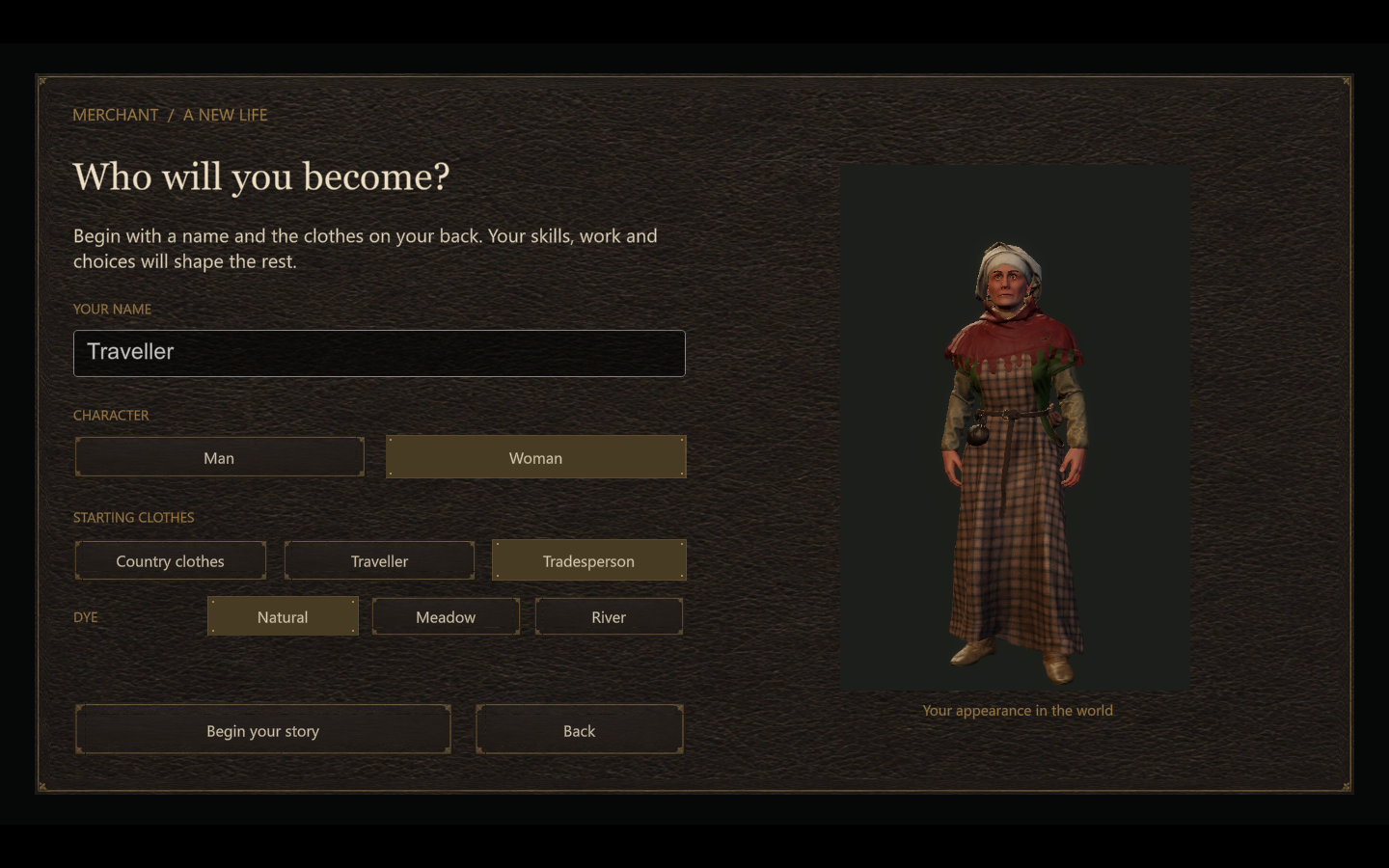
Character selection, crafted clothing, MetaHuman NPCs, the guided opening, and combat became the only active priorities. Four runtime checks passed across six purchased character combinations and save/reload, while rendered review caught a hair-material defect that code checks missed.

  • Food-and-earnings guidance passed standalone checks; housing guidance remains next.
  • Character visuals remain QA-only until clothing fit, distance detail, integration, packaging, and player review pass.
  • Overall acceptance remains 0/5 complete.
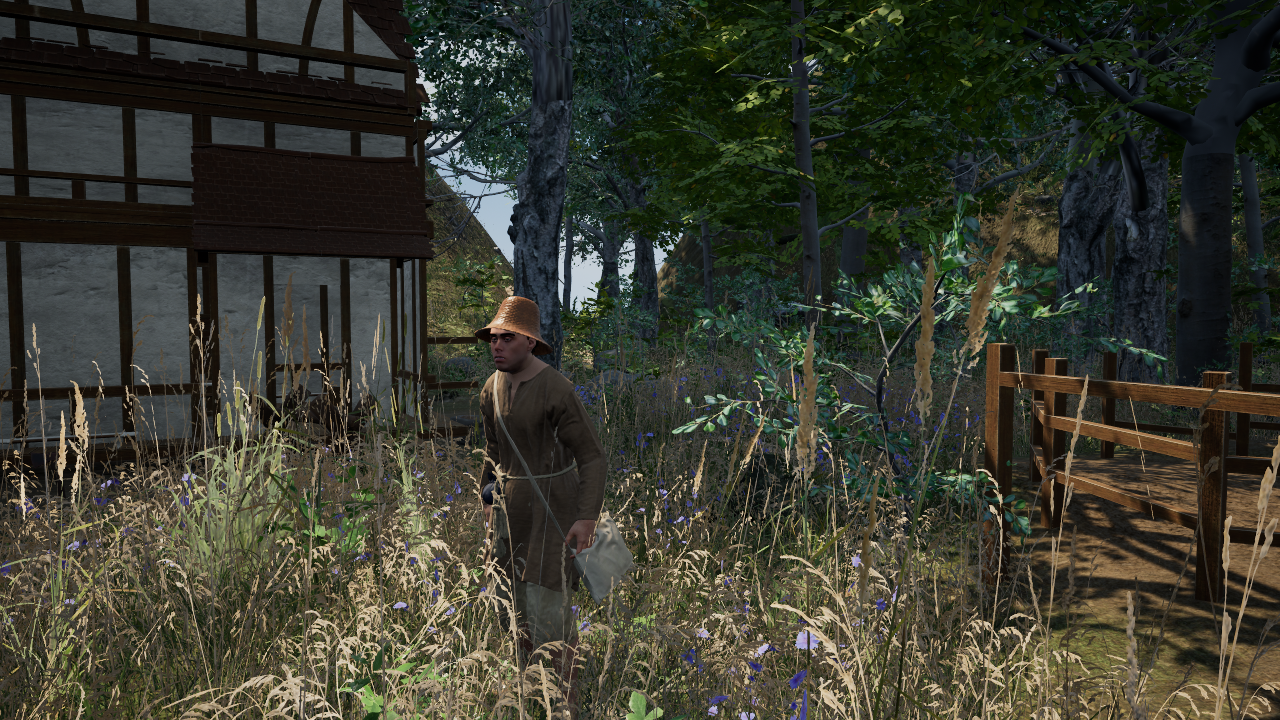
Current character development proof from the project.
Current character track / visual QA