Make a life
Find food and shelter, then choose a livelihood through fishing, gathering, farming or trade.
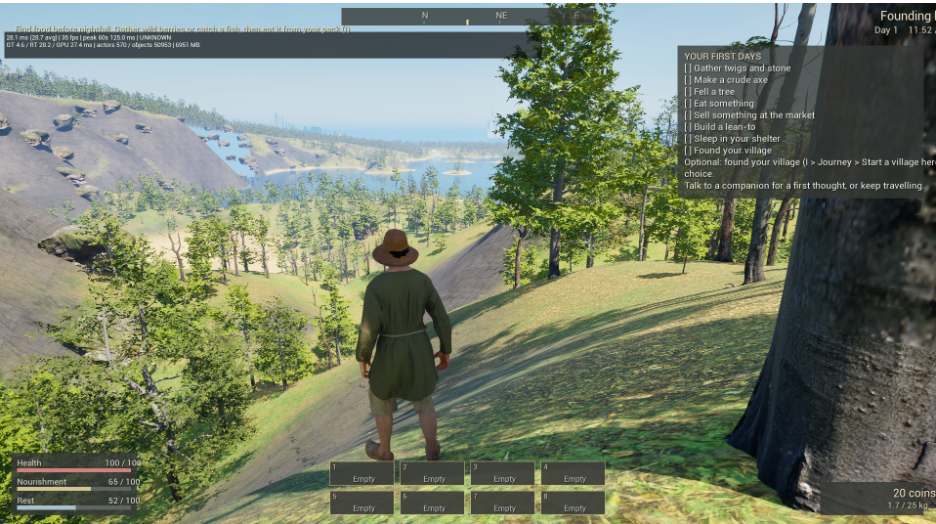
Start with nothing. Build a life. Fight for a realm.
Begin with survival, work and a home. The larger design spans rival towns, armies, territory and generations across a world planned at roughly 40 square miles. Stay a merchant or pursue control of the realm—the full vision is still being built.
Find food and shelter, then choose a livelihood through fishing, gathering, farming or trade.
Develop businesses, furnish a home and connect production to the people who need it.
The long-term plan includes rival towns, guards, armies and control of territory over generations.
Find what you need, learn how to use it, and decide who benefits. The Book connects your goods, skills, work, people and places so a day of survival can grow into a livelihood.
Fish, farm, gather or buy supplies. Craft tools and useful goods, practice a trade, and use what you learn to take on more work.
Follow prices and stock, sell what you produce, and put resources toward a home, a building project or a business. Paid deliveries and donations are intended to be distinct choices.
Keep track of your next goal, the people you know and the property you shape. A home or workshop gives your work a place in the wider community.
Development-build systems. Controlled PB15a checks exercised the valley foundation, but the complete first-hour flow and Book presentation still need ordinary player testing. Generational and realm-scale play remain the longer-term vision.
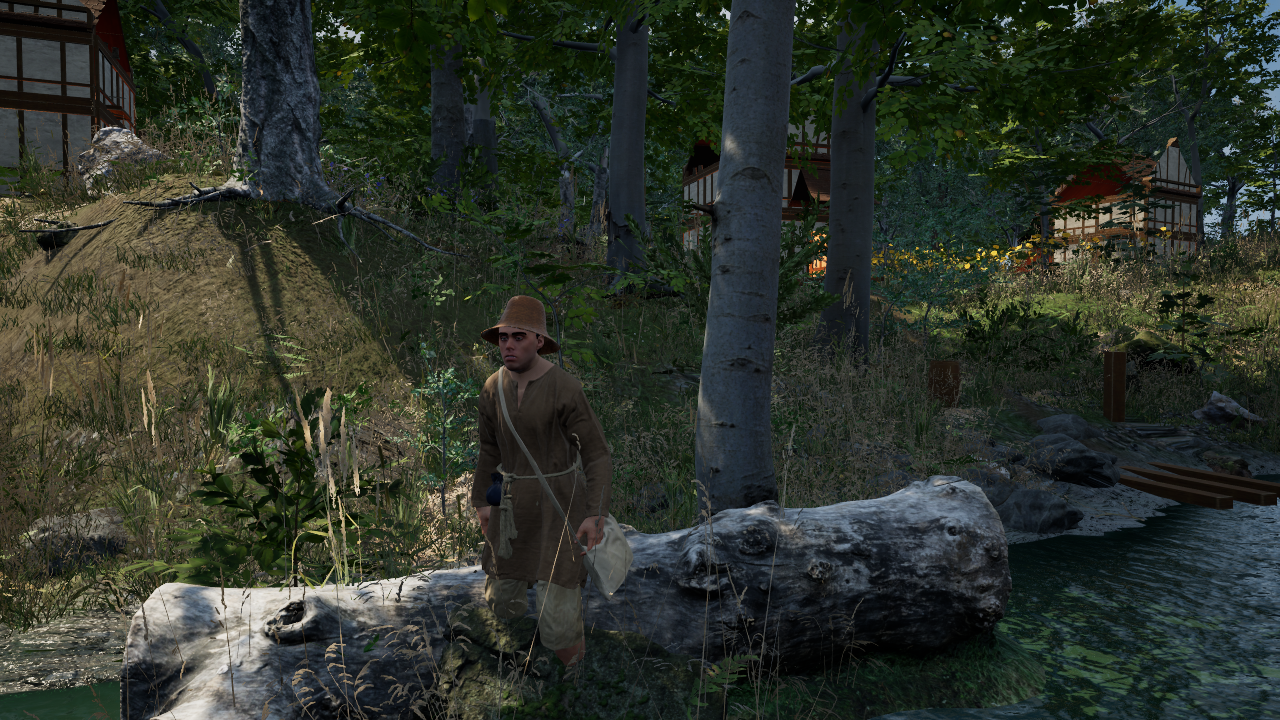
Explore how the systems connect ↗Explore the 19-skill reference ↗Full-game design tree ↗62-career design atlas ↗The valley has a revised development terrain, and a controlled opening-session review now shows the player in a sunlit meadow and beech forest. It also found an unclear first goal, interface overlap, an empty nearby map and no town in sight. Automated conversation attempts did not open a talk; a normal player keypress still needs checking.
This was scripted QA on a development copy, not a complete human first-hour playtest or a new public tester release. Reviewed source is advancing town services, food and relief decisions, roads, homes, character presentation, wildlife and sound. Some features still await a fresh package, visual checks and ordinary play. Performance on the target Windows hardware is being remeasured.
Earlier PB15J screenshots follow Jim from a Day 1 morning overlook through an evening sky, a balcony sunrise, and a snowy mountain view on Day 3 with two NPC companions. They are actual alpha gameplay photographs, not concept art or proof of a finished world. The pictures show stronger sense of place and changing light, while also exposing companion reachability, clothing, lighting and water work. They do not establish reliable routes, NPC livelihoods or saved continuation.
The terrain data spans a roughly 10-by-10-kilometre world with forest, snow, meadow, prairie, rock, marsh and shore areas. The intended shape is mountains to the north and east, ocean to the west, and cliffs meeting ocean and bay along the south. Foothills and selected passes should be explorable; the highest peaks mark the boundary. Much of the habitat detail is still painted terrain: recognizable conifers, reeds, roads and villages are not yet finished scenes.
The earlier PB15a world review still sets the proof gates: make water and camera movement trustworthy, prove NPC routes and livelihoods, improve natural banks and terrain transitions, and give each habitat readable plants and resources. The real test is a normal first hour followed by save, quit and continue with the world, NPCs and performance still holding together. PB15J photographs add visual evidence; they do not close those gates.
The larger arc remains survival and trade growing into homes, family, towns and production, with rival societies, armies and control of the realm as longer-term ambitions. Players may also choose to remain merchants or build a family estate. These systems are in development or planned at different stages, not all playable in PB15a.
Closed alpha · Newer source and controlled QA under review · A complete first hour, save and return, and player acceptance remain open · No public demo or release date announced.
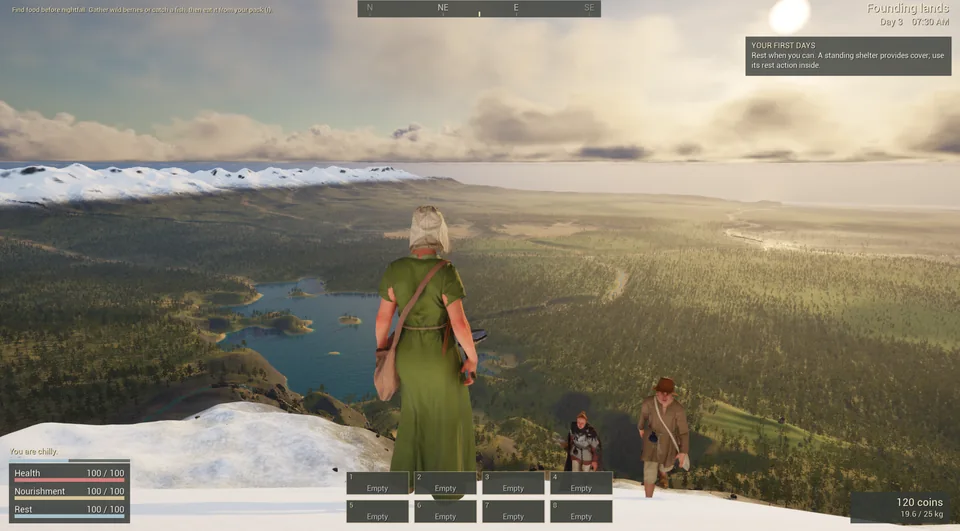
Two short field notes show what Jim saw, while the full gallery keeps all 25 supplied photographs with their evidence labels.
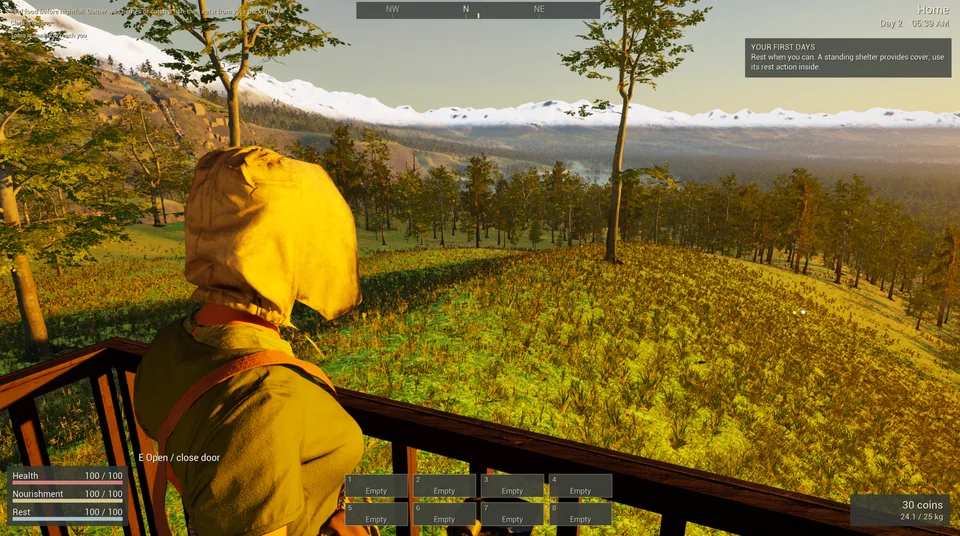
Morning, evening and a sunrise from Jim’s balcony. Four actual gameplay views in order.
Read the field note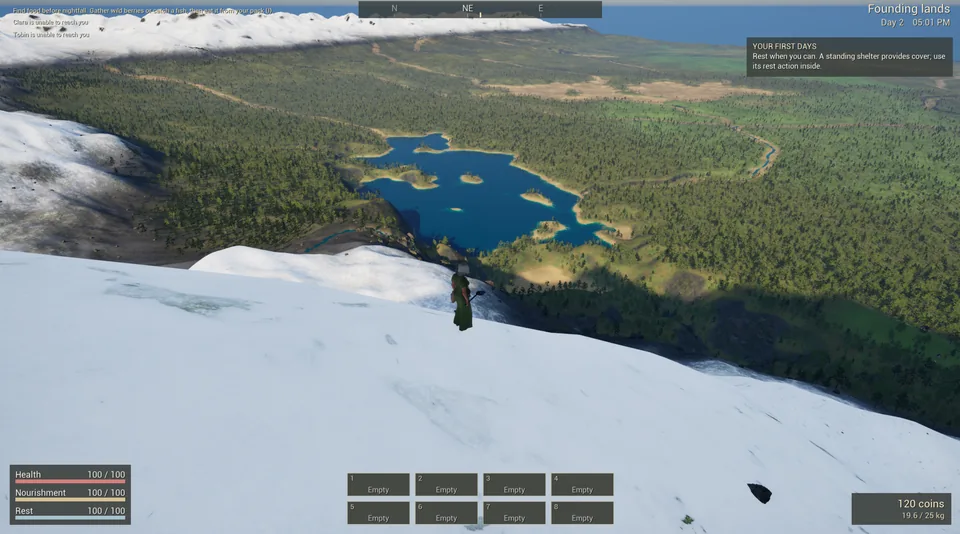
A mountain climb, sunrise and a view with two NPC companions. The complete sequence stays in the gallery.
Read the field note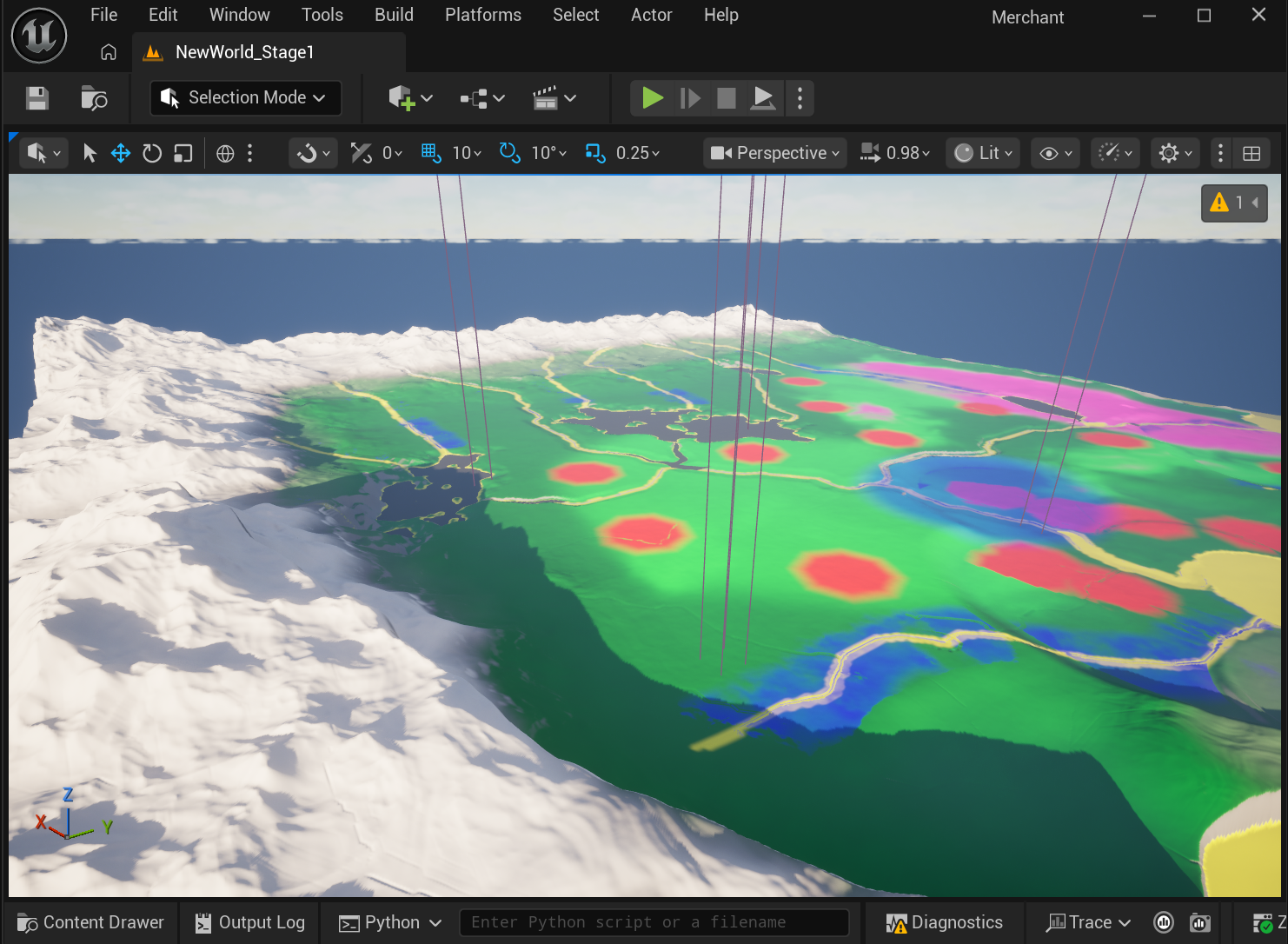
The PB15a capture above shows a player-height start view; this working-colour image shows an earlier terrain-design pass. The map already defines several regions, but the first-hour audit found that many need their own plants, landmarks and smoother transitions. NPC pathing and village formation still need a complete packaged-play check.
The images and terrain measurements do not prove the full size or quality of a walkable game world.
Development-team measurement of the new Realm terrain footprint, including land that may not be accessible.
About 30 square miles of that land has slopes under 35°; 20.5 square miles is also below 210 m elevation.
Compared with a community calculation of Skyrim’s 14.3-square-mile main-world heightmap, which includes inaccessible borders and excludes separate interiors.
This compares measured terrain footprints, not playable content, detail, hours of play, or verified traversal and NPC navigation. The Hearth & Fortune figures come from the development team’s heightmap analysis; the Skyrim estimate comes from a community terrain-cell calculation. See the two-image alpha post.
The vision is a roughly 40-square-mile medieval country where a personal life can become a business, a town, a family line or a fight for the realm. Rival settlers should shape its future too. You can remain small; ruling everything is an ambition, not a required ending.
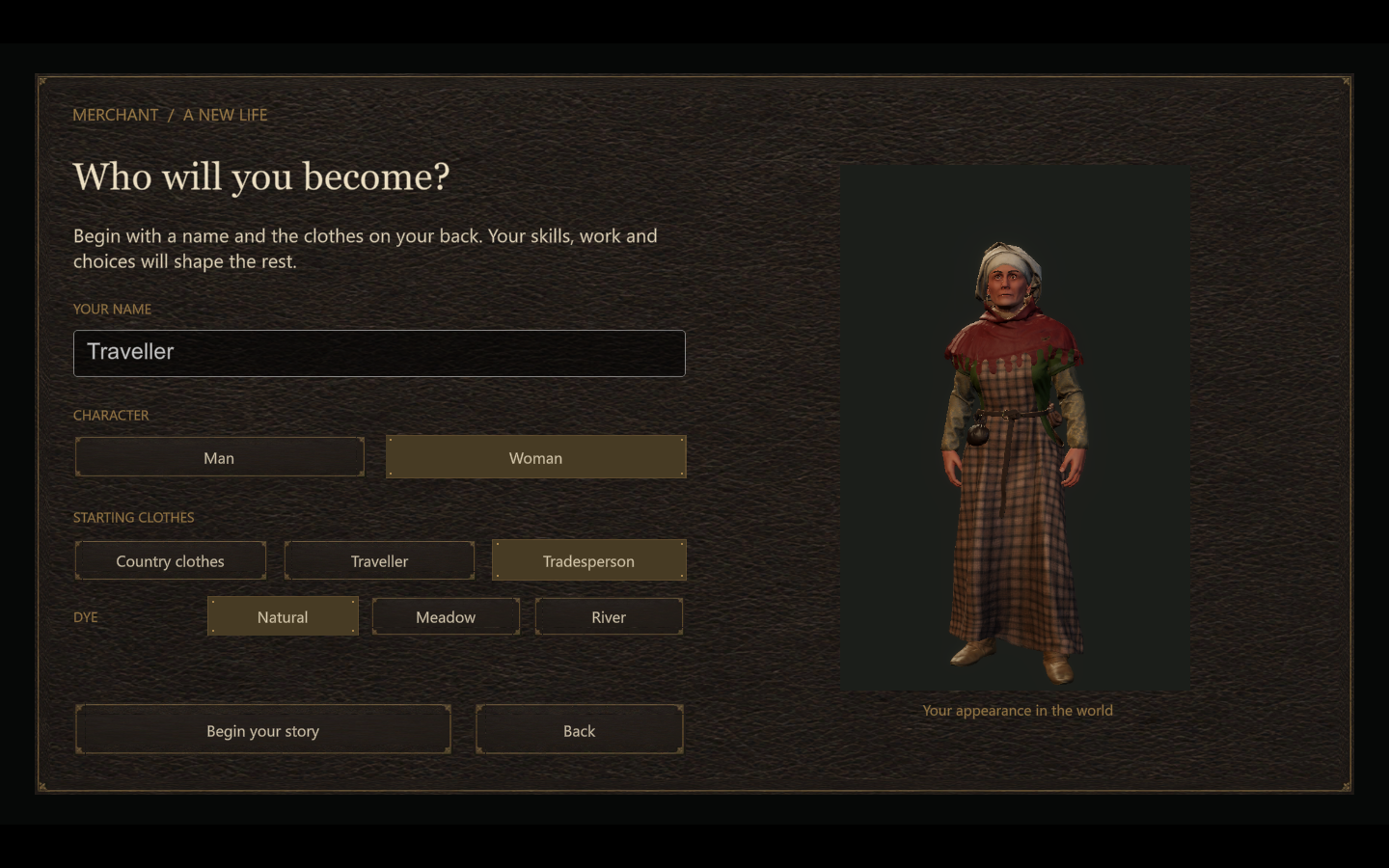
Work, trade, build a home and form relationships. A family and an inheritance can carry the consequences of that first life into the next generation.
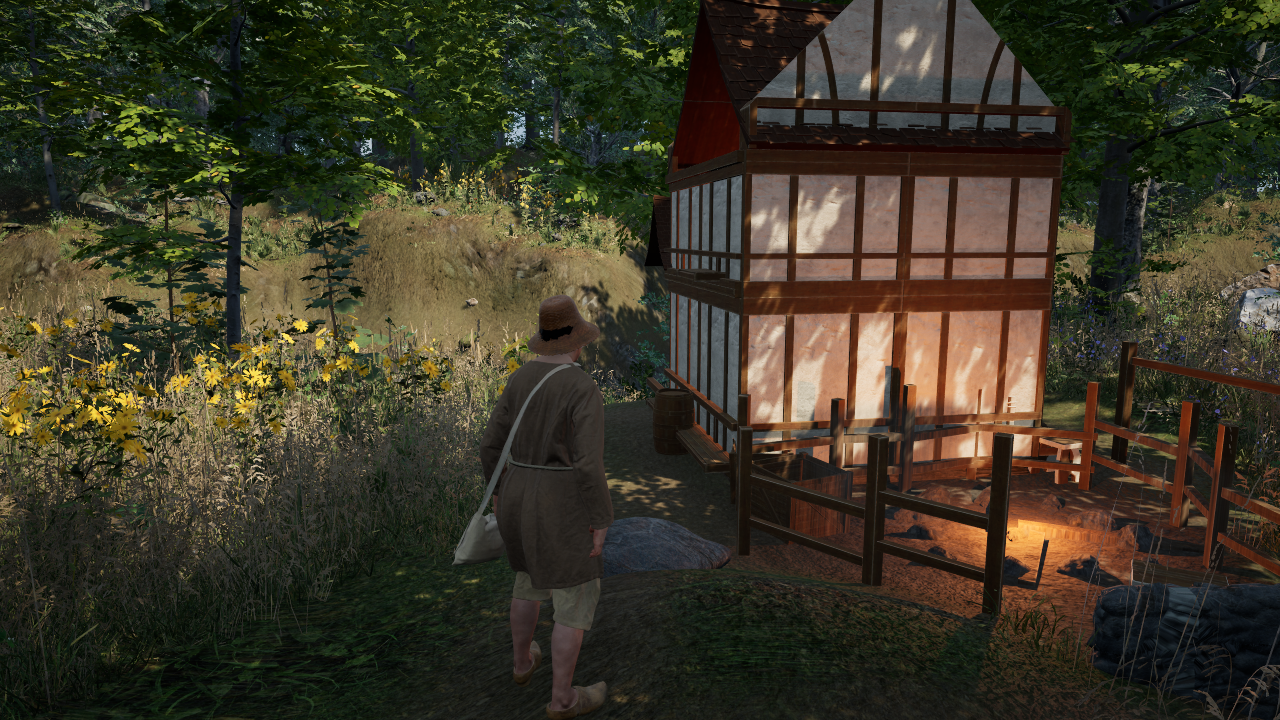
Found villages, grow businesses and production, support a family, and manage supplies. Each NPC is intended to have a distinct personality, goals, relationships and life choices. Their trade, families, interactions, settlement building and pursuit of power should let events unfold differently across playthroughs; this deeper simulation is planned or in development.
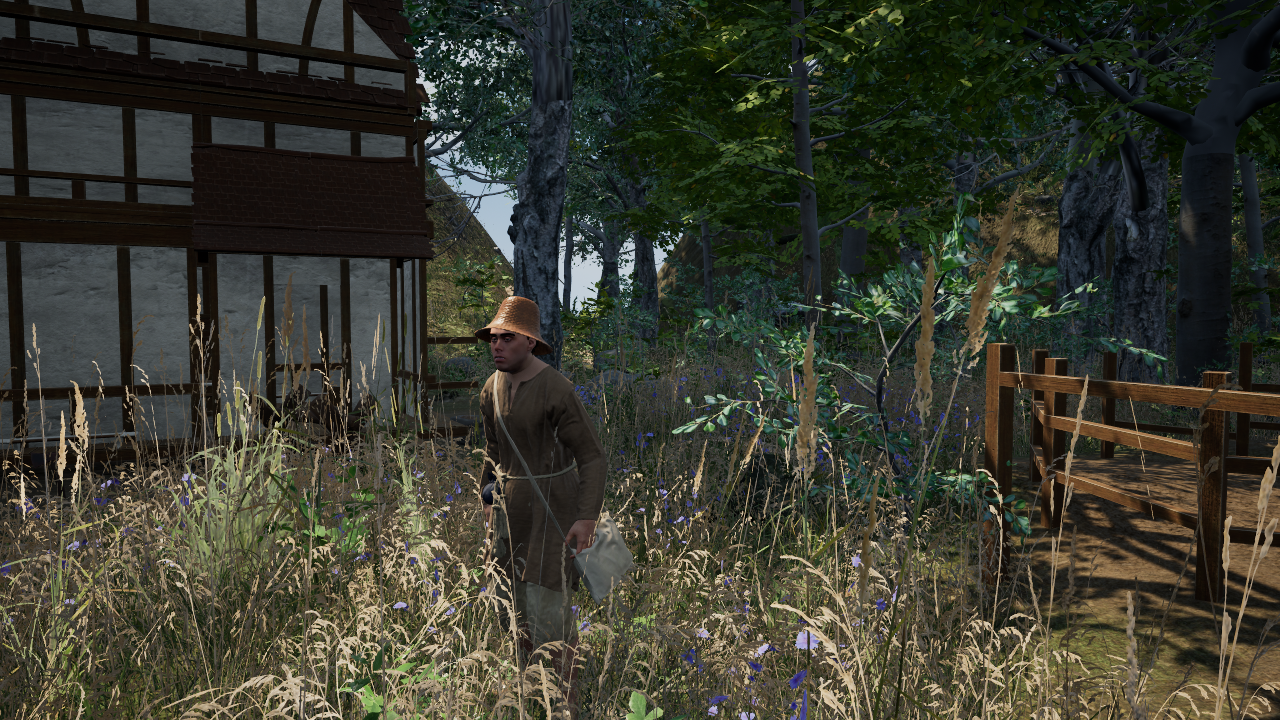
Recruit guards, raise and supply armies, defend settlements, take territory and challenge rival societies. The long-term design lets a family pursue control of the realm or pass down a home and trade instead.
Planned direction. Family and life-stage work exists in development builds; the full 40-square-mile walkable world, rival societies, armies, conquest, heir succession and realm simulation still need implementation and player proof. They are not claimed as current alpha features.
Read the full game design ↗Hearth & Fortune has grown through visible experiments, systems work and two engines. The rough steps matter: each one exposed the next problem worth solving.
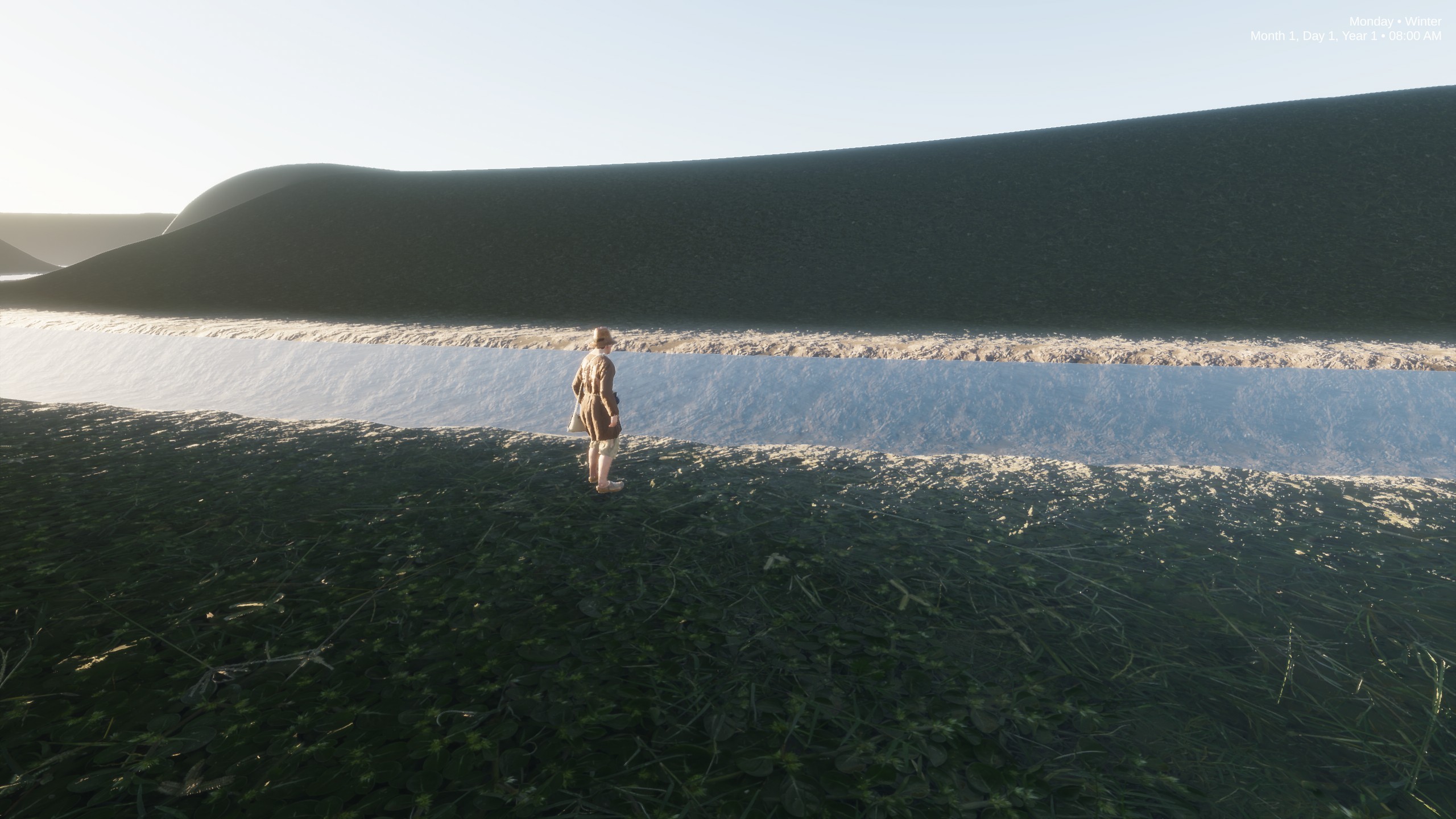
The first proof established movement, terrain, time and the idea of beginning with almost nothing.
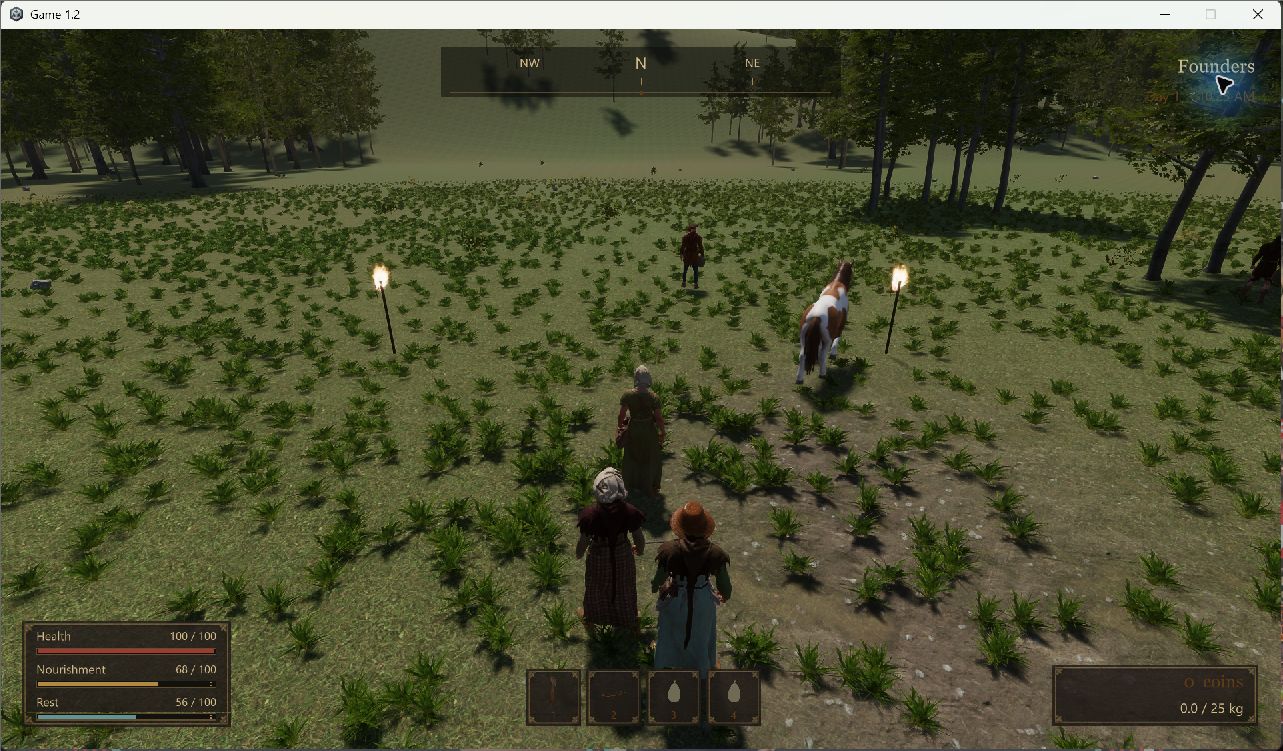
Villagers, needs, navigation, horses and a working HUD turned the open field into a playable foundation.
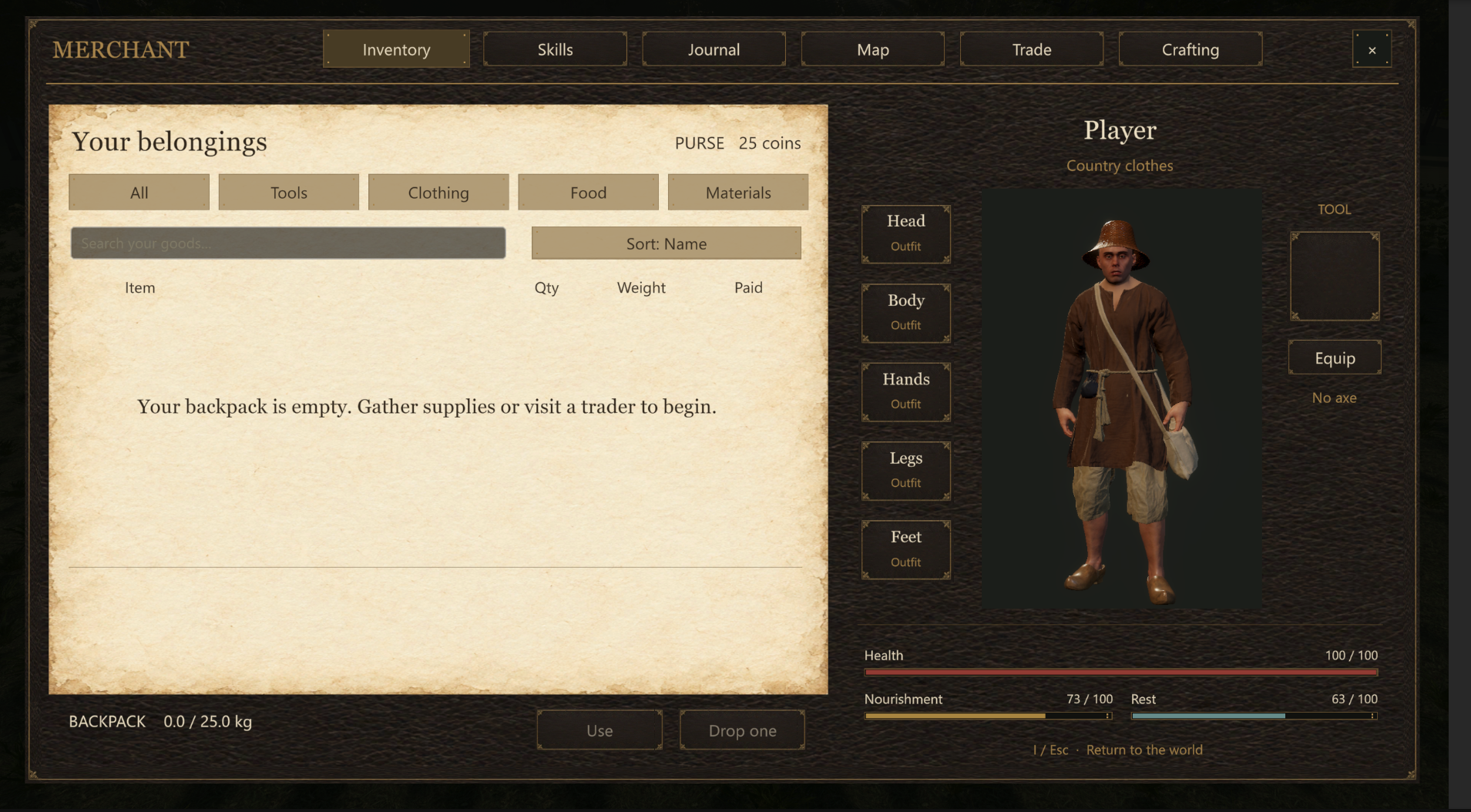
Character identity, equipment, inventory and the trade economy gave the player a role beyond simply exploring.
The character and gameplay foundation reached Unreal, while grey foliage shards and broken ground made the environmental migration problem unmistakable.
Shown intentionally as a real development checkpoint.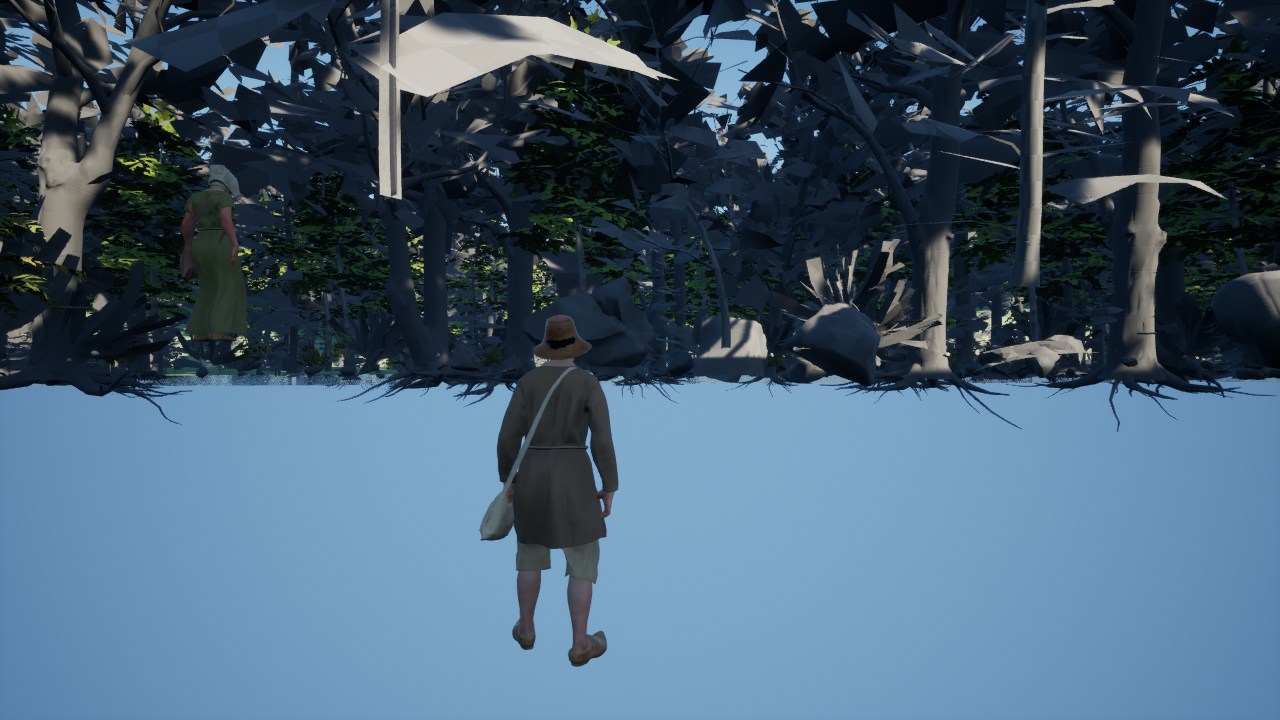
The accepted Riverside pass brings back a readable village, river routes, dense foliage and day-to-night atmosphere around the same grounded character.
The waterfall was an isolated visual experiment. Its value was the chain of decisions: build the idea, test whether it could be repaired, then return with a different design.
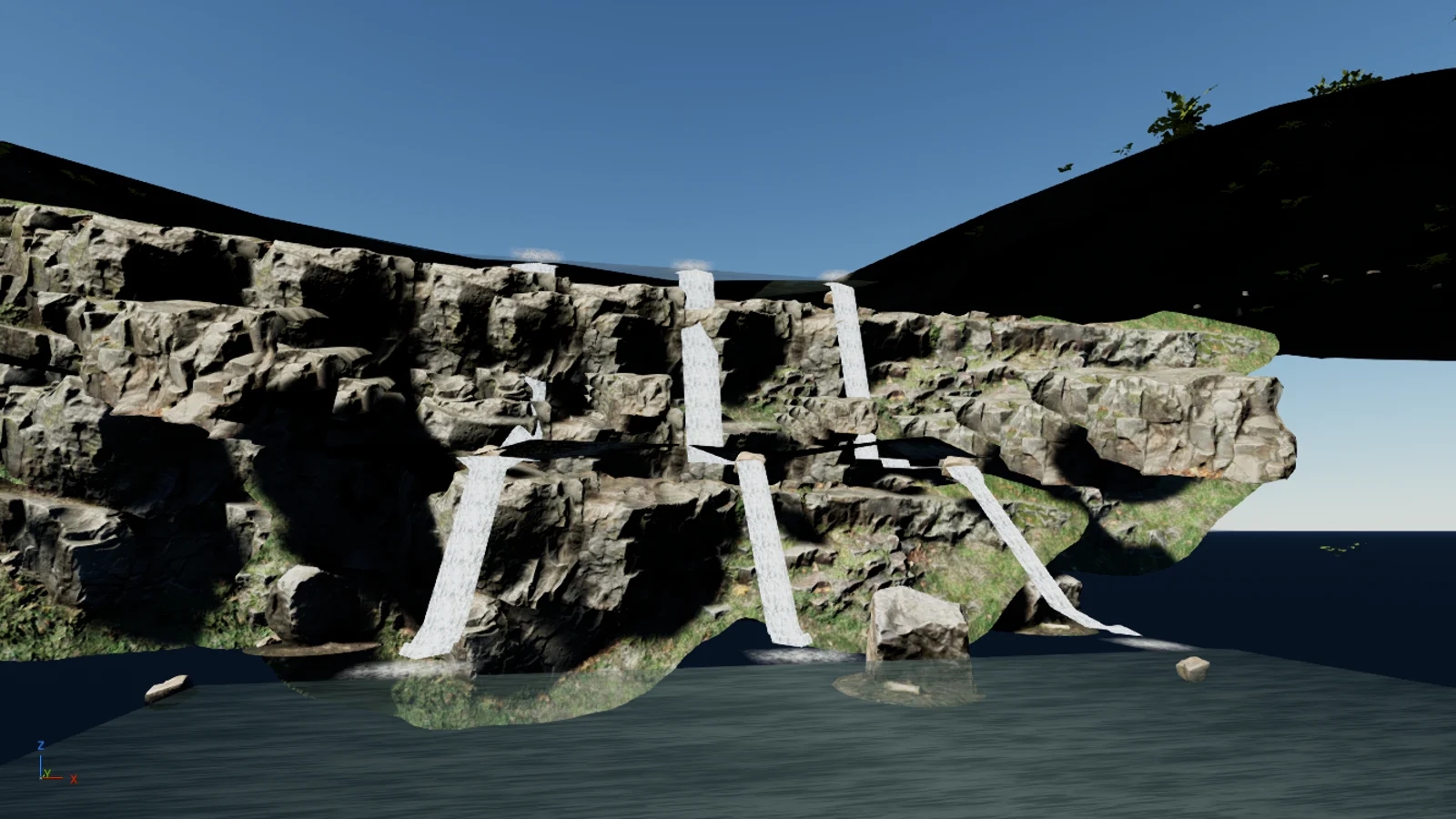
Multiple drops crossed a large rock formation, but water, cliff and lake did not yet feel like one landscape.
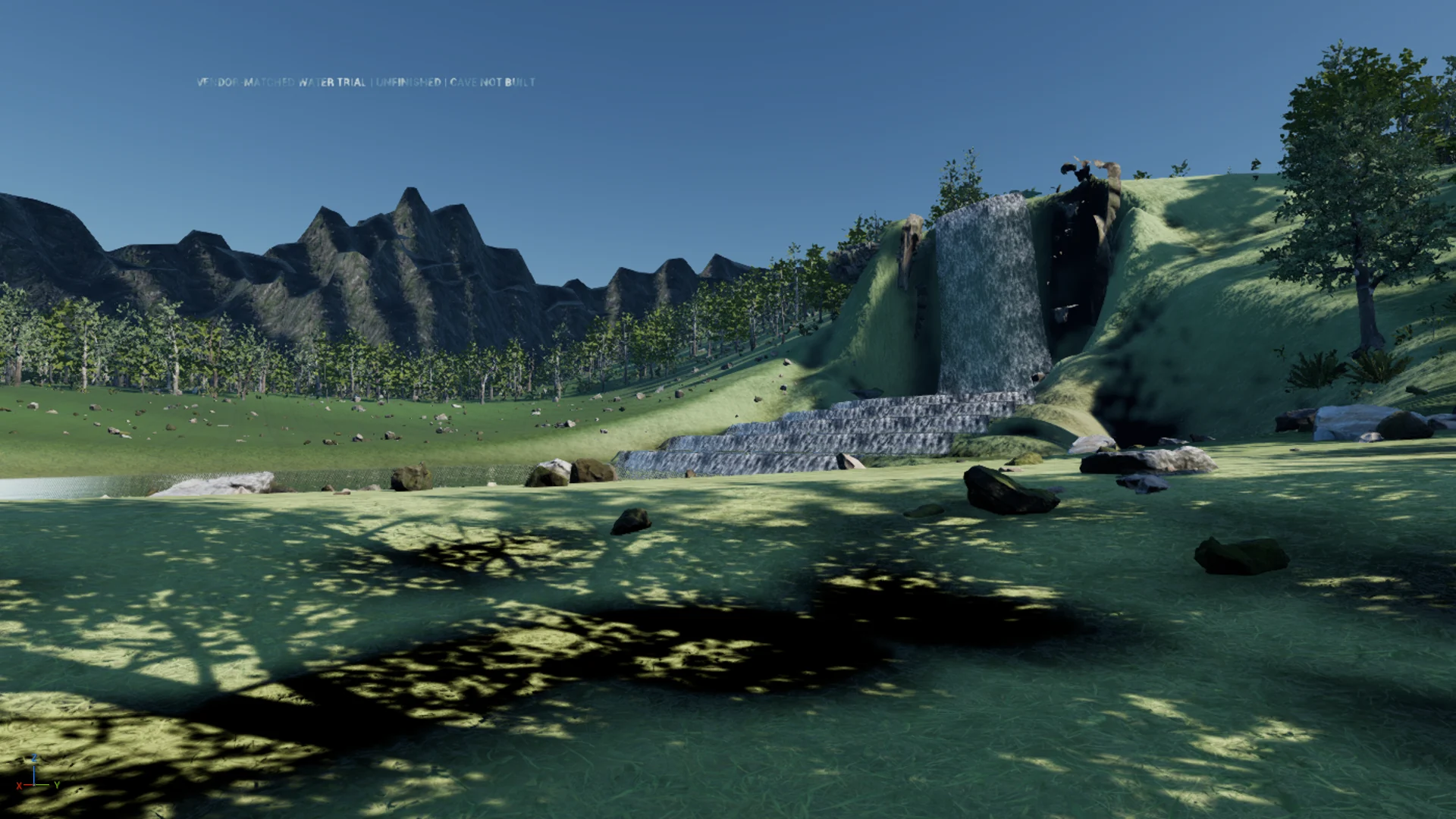
Landscape, vegetation and corrected water-flow direction improved the scene. Repetition and weak joins revealed what polishing alone could not solve.
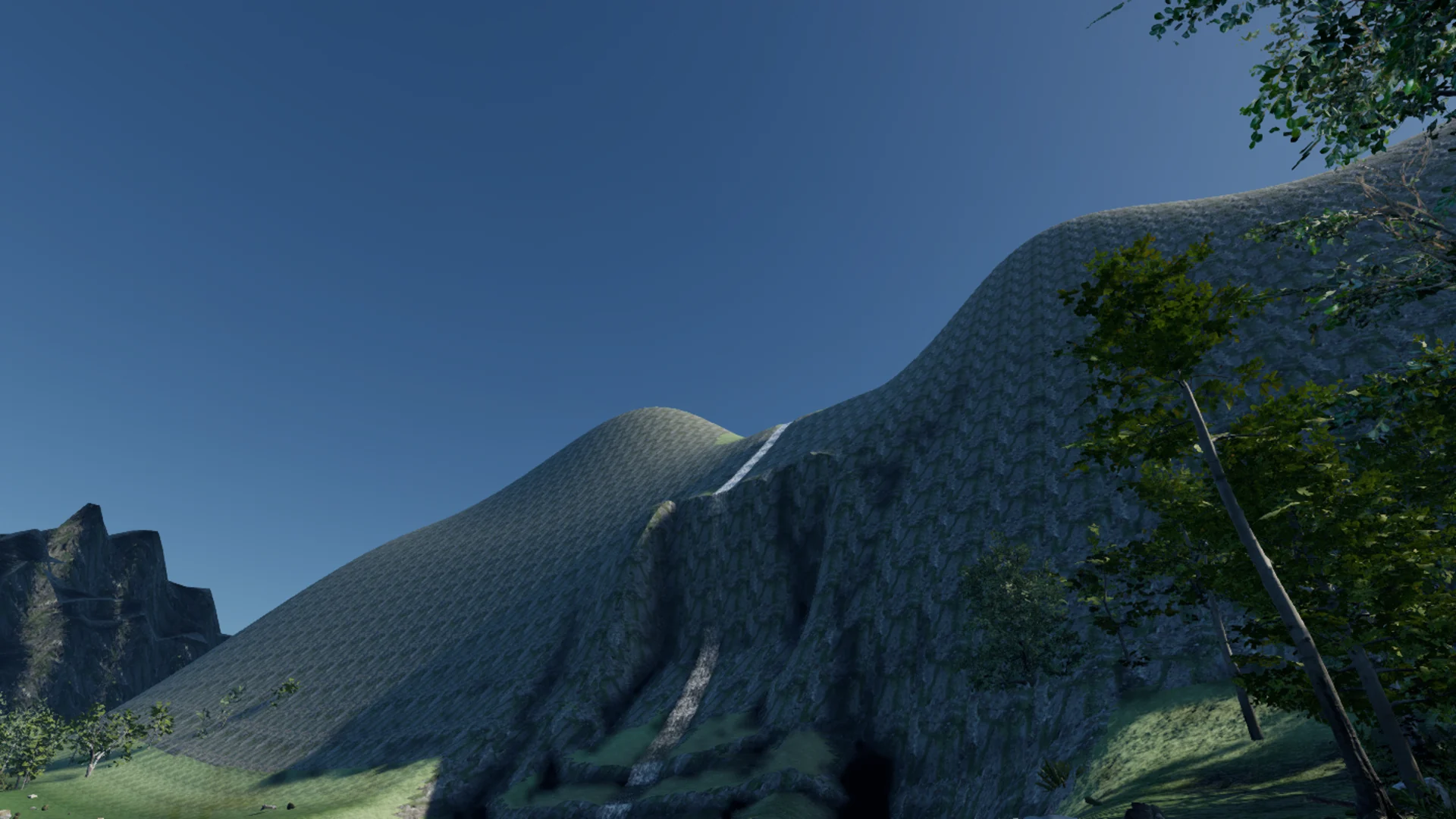
The later design began with mountain runoff and formed banks around its route. It remained an isolated study, not finished game scenery.
The story: progress sometimes means preserving the first attempt, learning why the modification still falls short, and returning with a better question.
Four accepted views from the current Riverside environment pass.
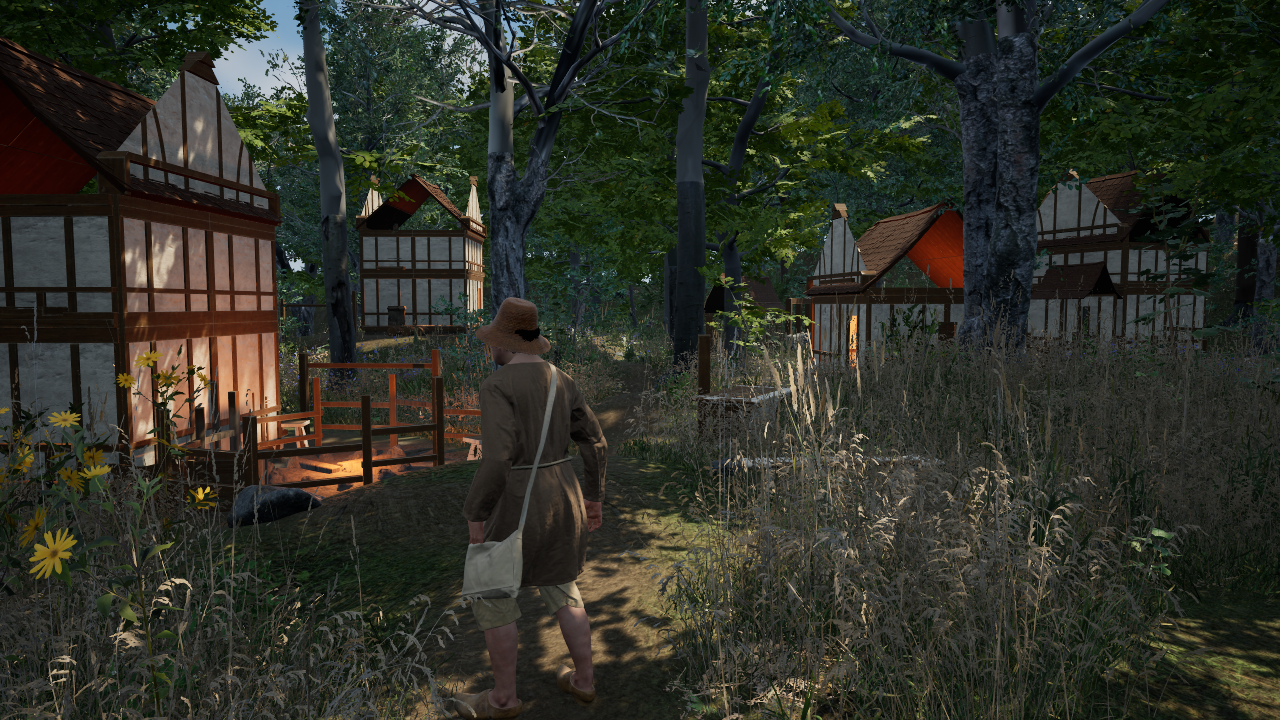
Follow the latest builds, fixes and news on itch.io. Invited testers: open the tester page (password required).
Tester page (password required) Hearth & Fortune on itch.io Developer log Discussion board
Hearth & Fortune remains in closed development alpha. Recent Windows development builds have passed selected automated checks, while later integration changes still need complete QA and ordinary player review. Unity and Unreal are separate development tracks with separate save files; there is no unrestricted public demo.
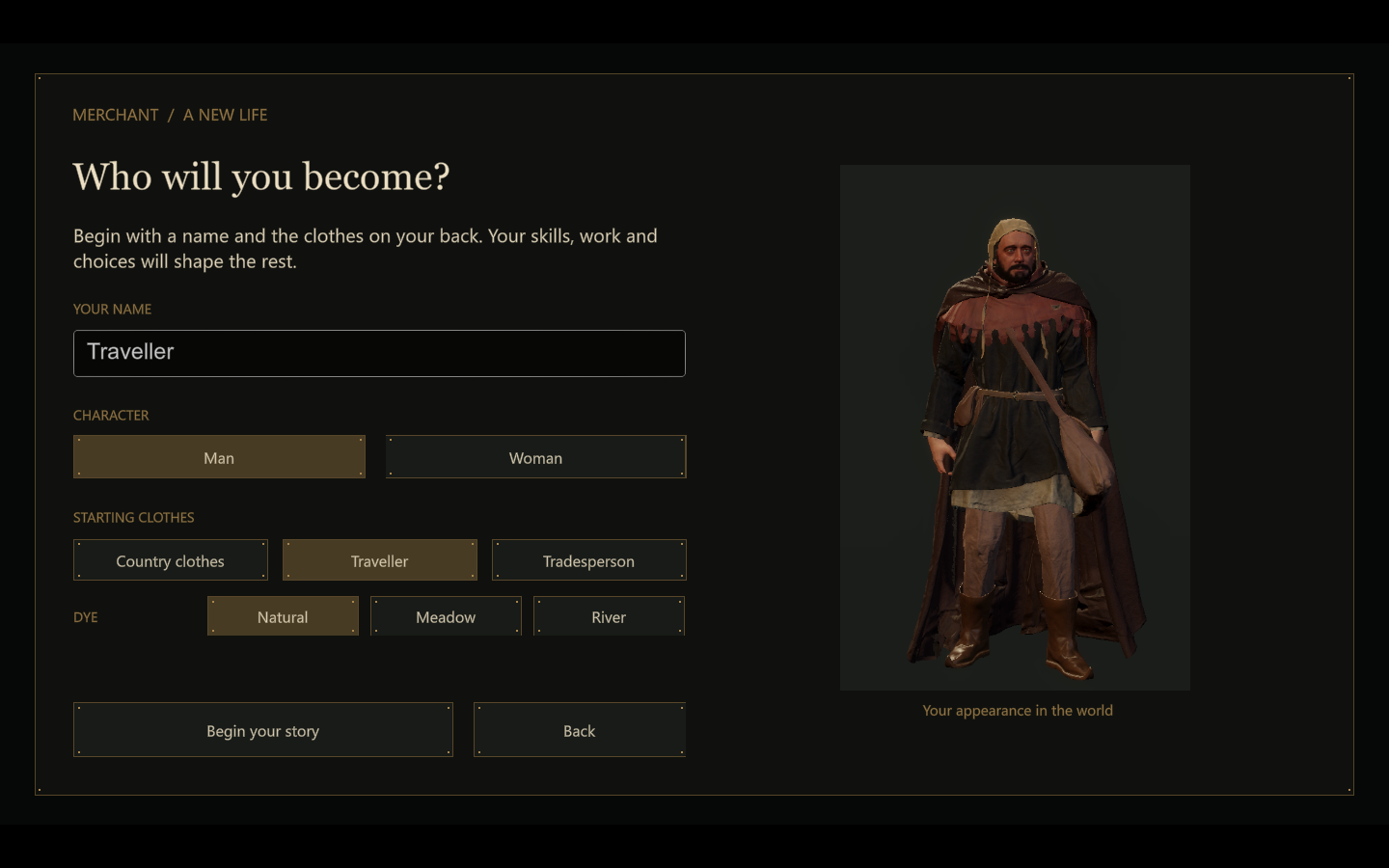
The earlier systems build remains a reference for character, inventory and world simulation work. Access is individually approved.
Public game updates
The current development direction, with new-world terrain and connected life-simulation systems under test. Natural play and player review remain open.
Ask about testingThe alpha is invitation-only; no private build link is published here. Contact jim@iconicxp.games about testing. The game does not automatically send feedback.
It is a single-player medieval life and strategy sandbox in development. The intended journey begins with one person and little to your name: find food and shelter, learn a trade, fish, gather, farm, make and sell goods, then build a home, a business or a village. Staying a merchant should be a complete ambition of its own.
The larger design is a planned roughly 40-square-mile country shaped by people beyond the player. NPCs are intended to have their own traits, goals, relationships and choices. They may work, trade, form families, cooperate, found rival towns or seek power. Those interactions should let different stories emerge as settlements grow, struggle and change.
Across generations, an heir could inherit what you built—or recover from what you lost. If you want a larger role, the vision includes guards, armies, defending and taking territory, and a path toward control of the realm. There is no required conquest or fixed final victory.
The current closed alpha and development builds test parts of that foundation; the full world, deep NPC autonomy, generational play and realm-scale strategy are still in development or planned. They are not all playable now. Read the full design and purpose or see the latest build status. Earlier posts used the working title Merchant; this is the same game.
Visit the Hearth & Fortune page on itch.io for public updates, or follow IconicXPGames on X. The public game page does not provide an unrestricted game download.
Alpha access is limited to selected testers. Contact jim@iconicxp.games to ask about testing.